
Crispy Roasted Cabbage Steaks Recipe: Caramelized, Budget-Friendly & Vegan
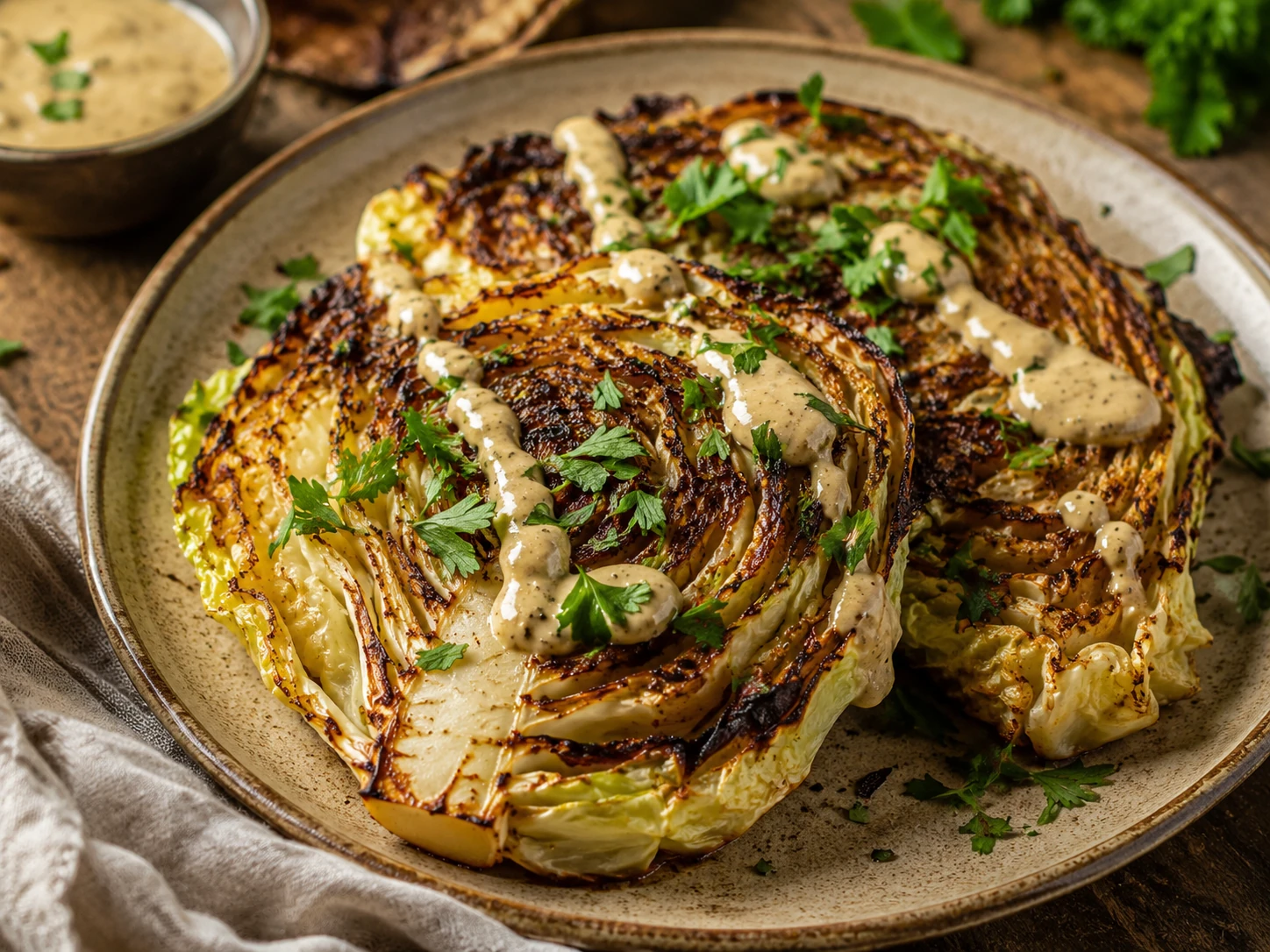
Roasted cabbage steaks were not love at first bite. My first attempt was a disaster — I sliced them too thin, skipped preheating the pan, and pulled them out after 20 minutes looking pale, limp, and frankly depressing. I almost gave up on cabbage entirely. Then a friend told me the secret: hotter oven, thicker slices, and patience. I tried again. What came out was completely different — deeply golden edges that crackled when I pressed them with a fork, a center so tender it almost melted, and this nutty, sweet smell filling the whole kitchen that I can only describe as caramel meeting roasted garlic. I stood at the oven eating them straight off the pan.
Cabbage is having a serious moment in 2026. Pinterest searches for roasted cabbage steaks have exploded — and once you make them, you’ll understand why. They’re budget-friendly (a whole head costs less than €1), naturally vegan and gluten-free, and when roasted at high heat they transform into something that honestly feels restaurant-worthy. Bold enough to be the main dish. Impressive enough for guests. Done in 35 minutes.
Let me walk you through exactly what I do differently now — and what I got wrong the first time.
Why This Roasted Cabbage Steaks Recipe Works
- High heat is non-negotiable: 220°C (425°F) is where the magic happens. Lower temperatures steam the cabbage instead of caramelizing it — and you lose that crispy, golden edge entirely. Don’t be tempted to go lower “just to be safe.”
- Only 6 pantry ingredients: Olive oil, garlic, smoked paprika, cumin, salt, and lemon. The smoked paprika does the heavy lifting — it adds depth and color that makes these steaks look and taste like they took effort.
- Naturally vegan and gluten-free: No dairy, no wheat, no compromise. This fits nearly every dietary preference without changing a single thing.
- The flip matters: Flipping halfway through roasting is what gives you caramelization on both sides — one side golden and lacy, the other deeply browned and slightly charred at the edges. Skip it and you’ll get one great side and one pale side.
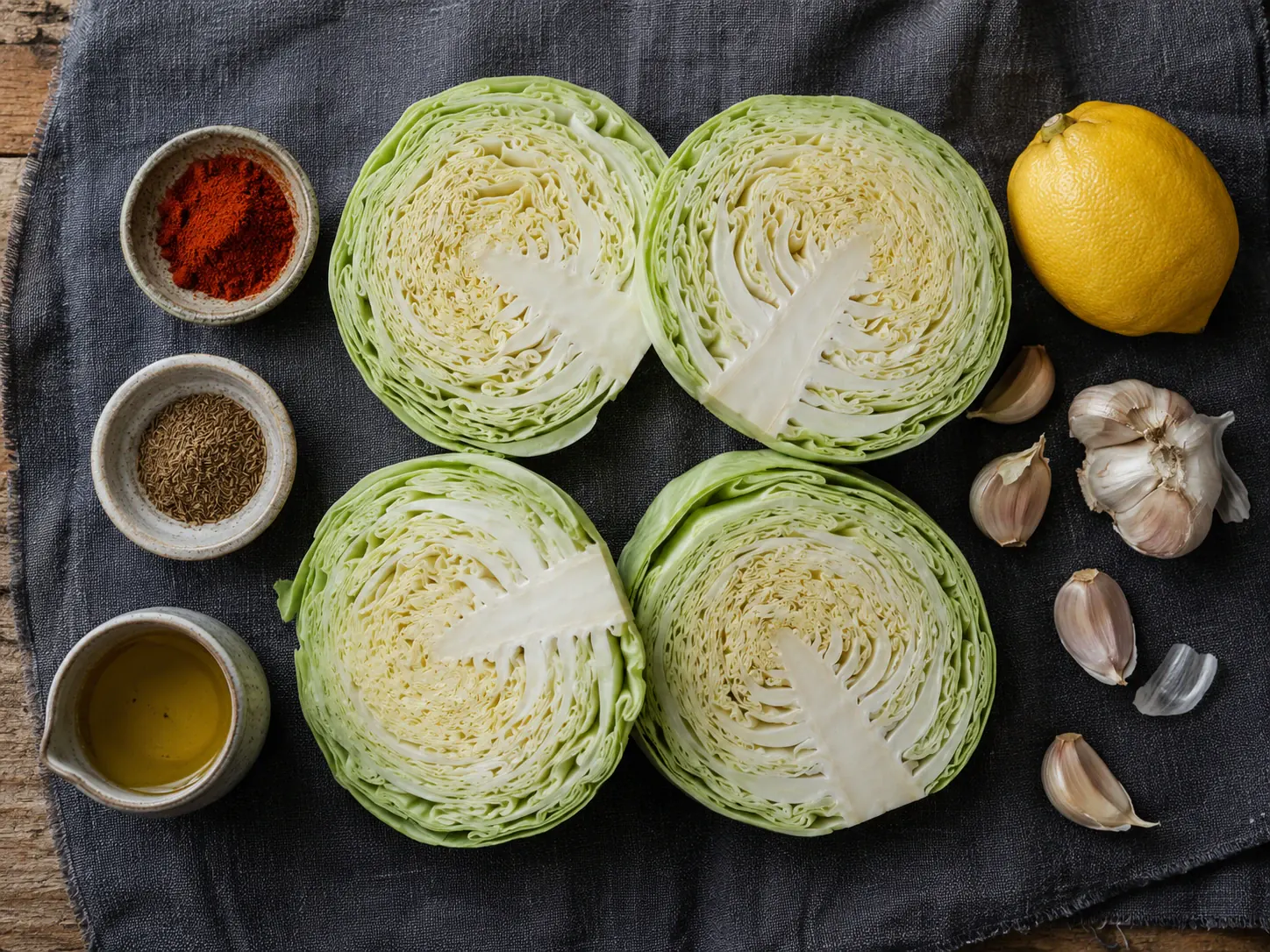
Ingredients for This Roasted Cabbage Steaks Recipe
- 1 medium green cabbage (about 1.2 kg) — firm and heavy, not soft
- 3 tablespoons extra virgin olive oil
- 4 garlic cloves, finely minced (or ½ teaspoon garlic powder if you’re in a rush)
- 1 teaspoon smoked paprika — this is the key flavor here, don’t skip it
- ½ teaspoon cumin
- ½ teaspoon salt
- ¼ teaspoon black pepper
- Juice of ½ lemon, for finishing
- Fresh parsley, chopped, for garnish
- Optional toppings: tahini drizzle, red chili flakes, toasted pine nuts, pomegranate seeds
No smoked paprika? Regular paprika works — the flavor will be milder and sweeter, less smoky. Add a tiny pinch of cumin extra to compensate.
How to Make Roasted Cabbage Steaks
- Preheat your oven to 220°C (425°F) and line a large baking sheet with parchment paper. Give it a full 15 minutes to heat up — a properly hot oven is the difference between caramelized and just cooked.
- Slice the cabbage into rounds about 2–2.5 cm (¾–1 inch) thick. You should get 4–6 steaks from a medium head. Keep the core intact — it’s what holds each steak together during roasting. (My first mistake was cutting them to 1 cm — they fell apart immediately.)
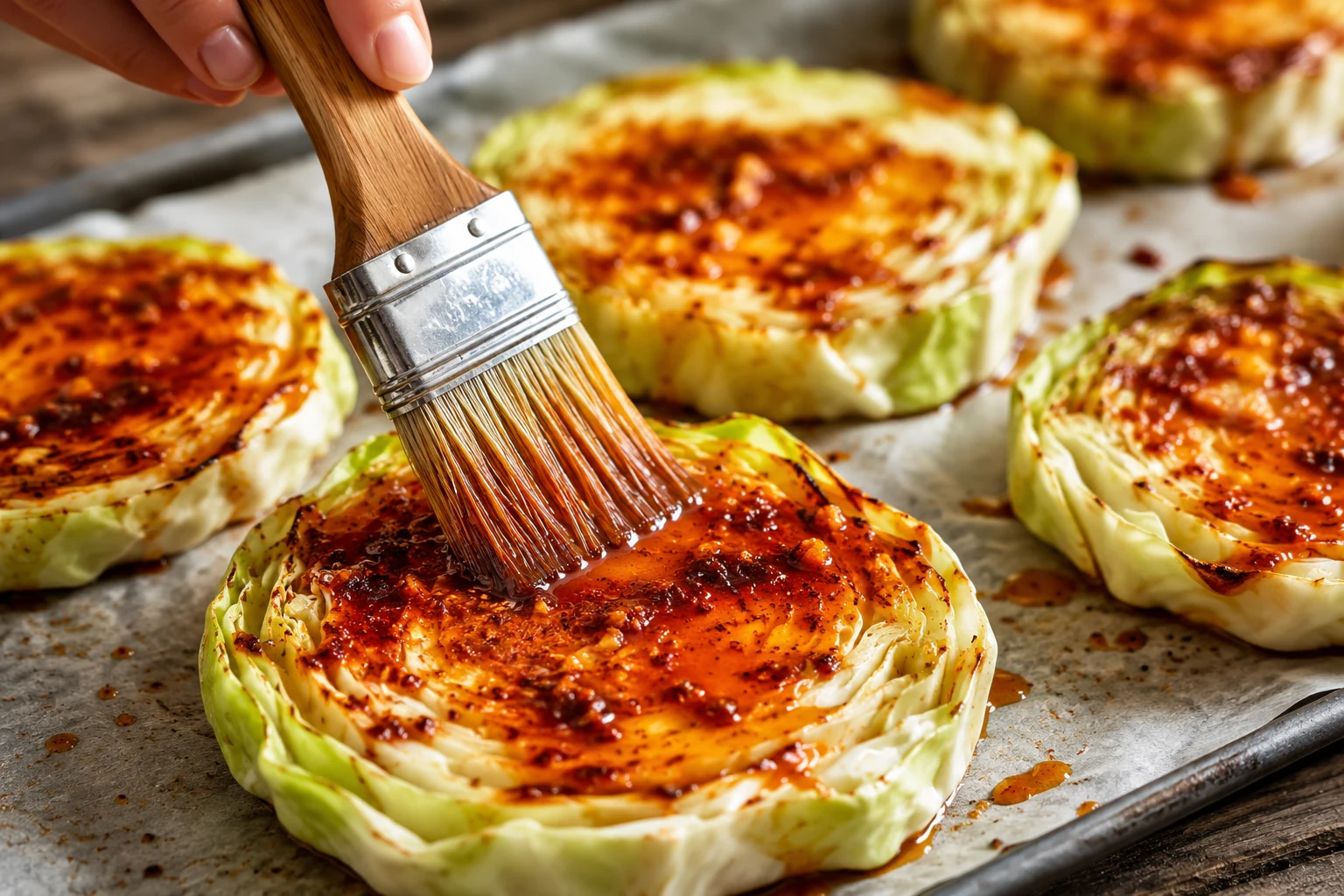
- Make the seasoning oil: In a small bowl, whisk together the olive oil, minced garlic, smoked paprika, cumin, salt, and pepper. The oil should turn a deep, rust-orange color from the paprika — that’s your visual cue it’s ready.
- Brush both sides generously. Lay the steaks on your baking sheet and brush every surface with the seasoning oil — top, bottom, and the sides. Don’t be shy. The oil is what carries the flavor and drives the caramelization.
- Roast for 25–30 minutes, flipping carefully once halfway through. You’ll know they’re ready when the edges are a deep brown and the kitchen smells like something between roasted onion and caramelized sugar. Finish immediately with fresh lemon juice and chopped parsley.
Pro Tips & Variations for Perfect Roasted Cabbage Steaks
- Don’t cut them too thin. Anything under 2 cm will fall apart when you flip it, and you’ll end up with roasted cabbage shreds instead of steaks. Thicker is always better — the core holds everything together.
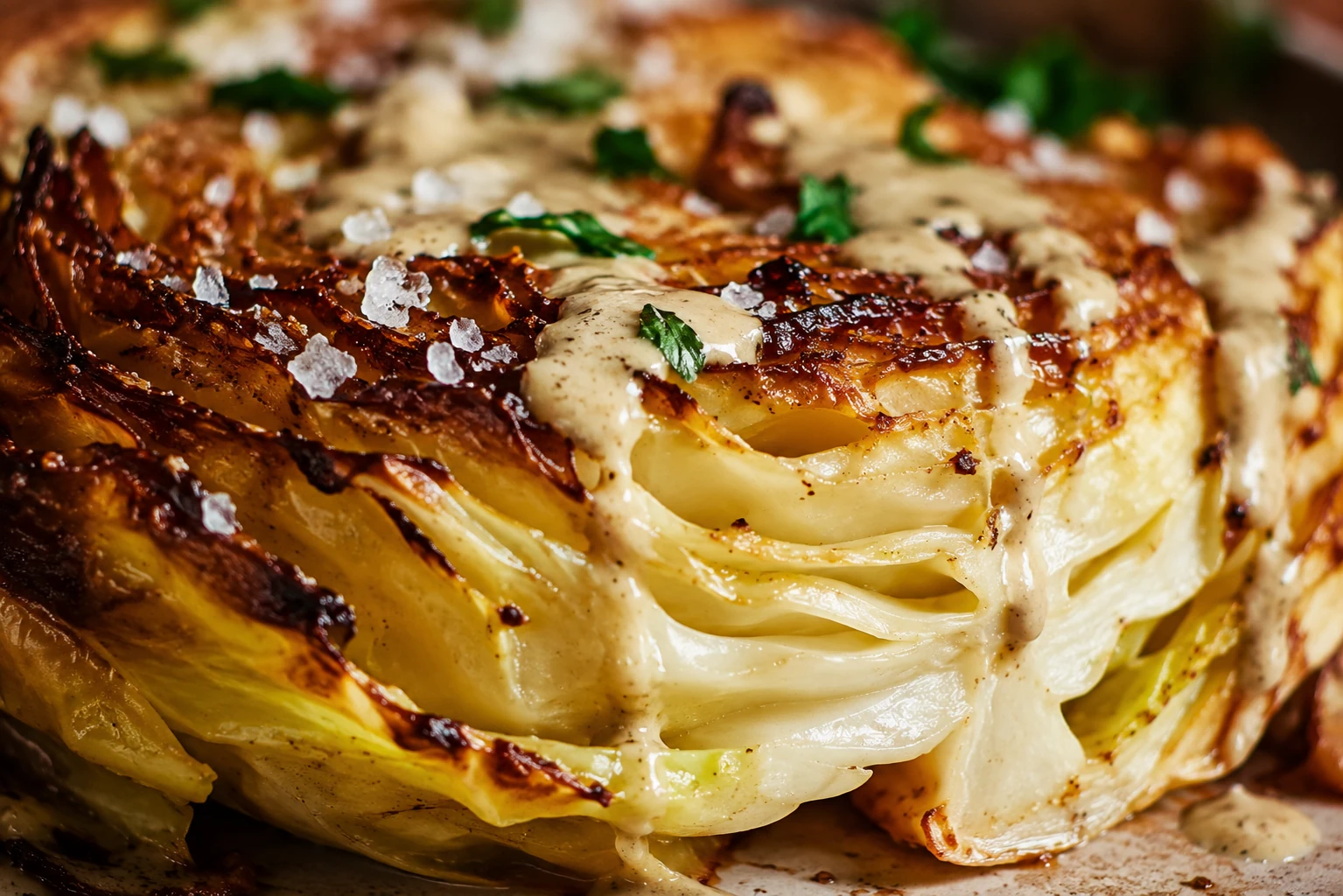
- Try a tahini drizzle: Whisk 2 tablespoons of tahini with the juice of half a lemon, a small pinch of garlic, and enough water to make it pourable. Drizzle it over the finished steaks. The nutty creaminess against the smoky cabbage is genuinely one of my favorite flavor combinations.
- Add heat: A pinch of red chili flakes in the seasoning oil brings a sweet-spicy kick that works beautifully against the natural sweetness of the caramelized cabbage. Start with ¼ teaspoon — you can always add more at the table.
- Make it a full meal: Serve on a bed of hummus, or alongside a grain bowl from our vegan & vegetarian recipes. A fried egg on top makes it a protein-packed weeknight dinner that takes zero extra effort.
How to Store Roasted Cabbage Steaks
Leftovers keep in an airtight container in the refrigerator for up to 3 days. The key to reheating is the oven — place them on a baking sheet at 200°C (400°F) for 8–10 minutes and they’ll crisp back up almost like fresh. The microwave turns them soft and watery, so avoid it if you can. Cold leftovers are also excellent sliced into strips and tossed through grain bowls or tucked into a wrap with hummus and pickled onions. According to the Harvard T.H. Chan School of Public Health, cruciferous vegetables like cabbage are among the most nutrient-dense foods available — so these leftovers are genuinely worth saving.
Why Roasted Cabbage Steaks Deserve a Spot in Your Weekly Rotation
Cabbage is one of the most underrated vegetables in the kitchen. However, once you roast it at high heat, everything changes — the layers caramelize, the edges turn crispy, and the flavor shifts from sharp and raw to something deeply savory and almost sweet.
Furthermore, roasted cabbage steaks are one of the most economical meals you can make. A single head of cabbage costs a fraction of what you’d pay for meat or fish, and it feeds four people generously. Additionally, cabbage is packed with vitamin C, vitamin K, and fiber — making it a genuinely nutritious choice, not just a budget one.
According to the Harvard T.H. Chan School of Public Health, cruciferous vegetables like cabbage contain glucosinolates, compounds that have been studied for their role in reducing inflammation. So roasting cabbage steaks is not only delicious — it’s also a smart addition to a balanced diet.
How to Get the Perfect Sear on Roasted Cabbage Steaks
The difference between soggy cabbage and crispy, caramelized roasted cabbage steaks comes down to three things:
- High heat: 220°C / 425°F minimum. Lower temperatures steam the cabbage instead of roasting it.
- Dry surface: Pat the cut sides dry before oiling. Moisture is the enemy of caramelization.
- No crowding: Give each steak its own space on the baking sheet. Overlapping means steaming, not roasting.
- Flip once: At the halfway point, flip carefully with a wide spatula to caramelize both sides evenly.
These small details make the difference between a pale, soft slice and a steak with deep golden edges and a tender center. Finally, always roast on the top third of your oven where the heat is most intense.
Frequently Asked Questions
Can I make roasted cabbage steaks ahead of time?
Yes — slice and season them up to 24 hours in advance, then cover and refrigerate. Roast fresh before serving for the best texture. Fully roasted steaks can also be made ahead and reheated in the oven as described above. They’re one of those rare vegetables that actually reheat well.
What type of cabbage works best for roasted cabbage steaks?
Green cabbage is the best choice — dense, affordable, and sturdy enough to hold its shape as a thick steak. Red cabbage also works beautifully and roasts to a gorgeous deep purple-burgundy color with a slightly sweeter flavor. Savoy cabbage is more delicate and may not hold together as firmly, but the flavor is lovely if you handle it gently.
Do roasted cabbage steaks actually taste good?
They genuinely surprised me — and I was deeply skeptical going in. The high heat caramelizes the natural sugars in the cabbage, transforming any bitterness into deep, sweet savoriness. The outer edges get crispy and almost lacy; the inner layers stay soft and silky. With the garlic-paprika seasoning, the whole thing tastes far more complex than you’d expect from a vegetable that costs less than €1. My family now requests these as a side dish at least once a week.
Did you try these roasted cabbage steaks? I’d love to know what toppings you used — tahini? Chili flakes? Something I haven’t tried yet? Drop it in the comments below. And if you’re exploring more plant-based ideas, our vegan & vegetarian recipes are a good place to keep going.