
Ceuta Food Guide: Traditional Dishes and Local Recipes
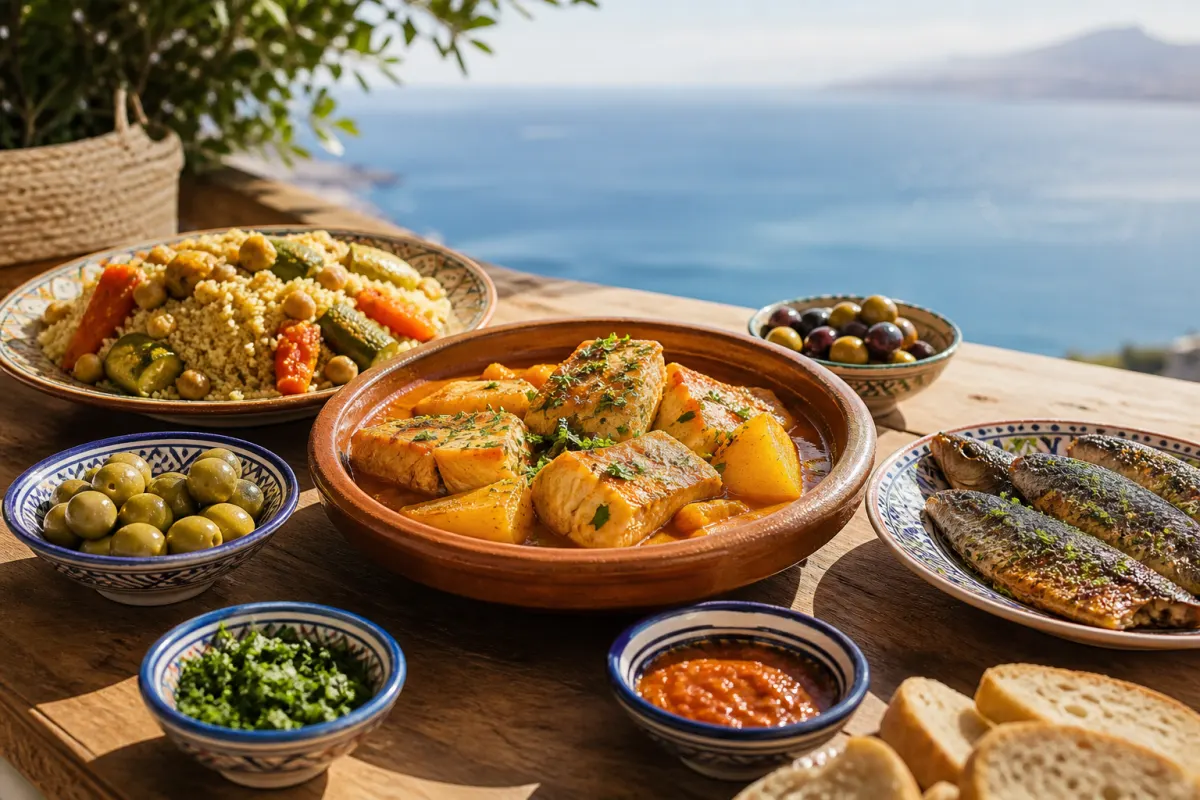
Ceuta sits on the African continent but belongs to Spain, and its food makes that geography easy to taste. Andalusian seafood cooking meets ingredients, spices, and dishes associated with neighboring Morocco. The result is not one single tradition, but a local cuisine shaped by the Mediterranean, the Atlantic, and the communities that share the city.
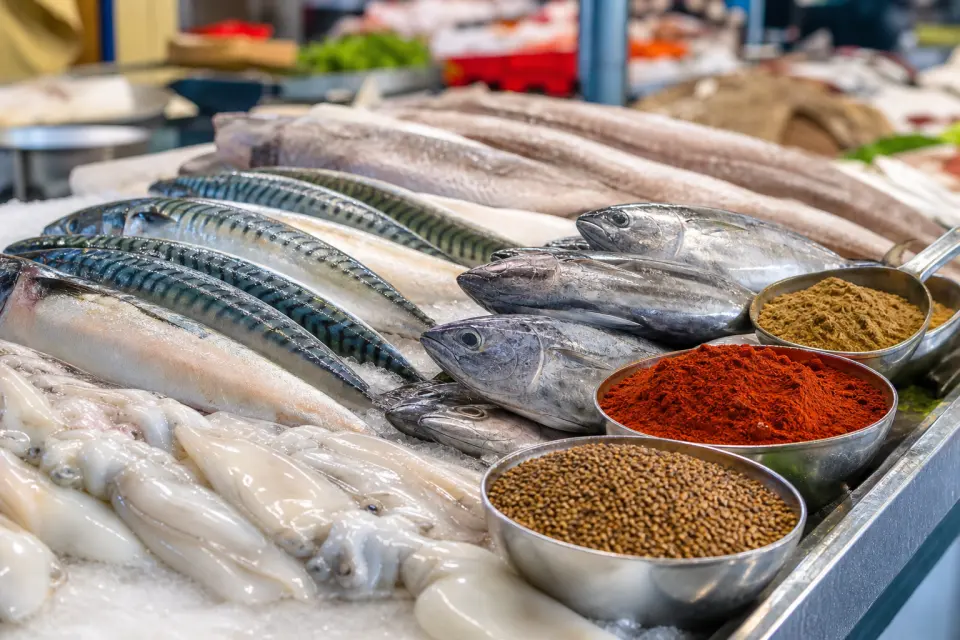
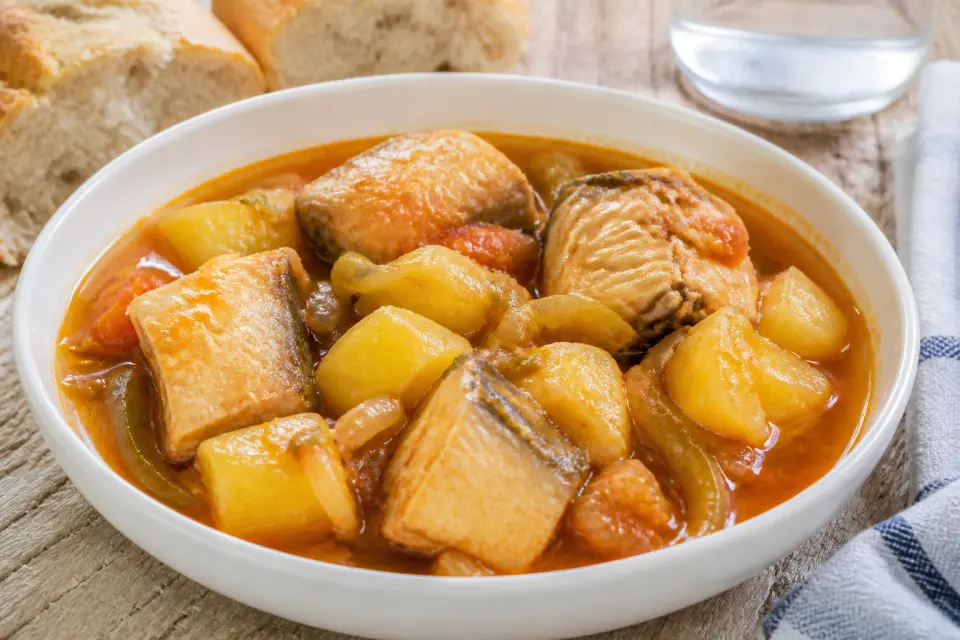
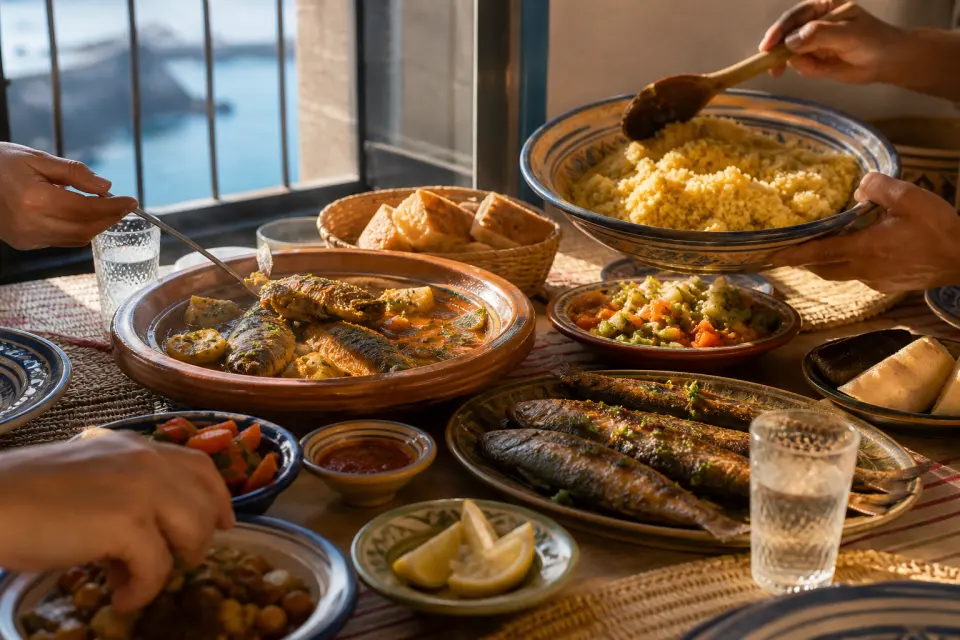
Image disclosure: The food images in this article are AI-generated illustrations. They are provided as visual references; actual ingredients, preparation, and results may vary.
Key takeaways
- Ceuta’s cuisine is strongly maritime, with mackerel, little tunny, bonito, cuttlefish, and other local seafood playing central roles.
- The city’s official tourism guide lists dishes such as papas con chocos, gazpachuelo, estofado de melva, cuscús, and caballas a la mar chica among its local specialties.
- Moroccan influence is especially visible in couscous, pastela, sweet mint tea, and spice-forward meat and fish preparations.
- Recipes vary from household to household, so it is more accurate to speak of local versions than one definitive formula.
Why Ceuta’s Food Tastes Different
Ceuta is bordered by the sea and Morocco rather than by a large agricultural hinterland. Fishing, trade, and the city’s markets have therefore shaped everyday cooking. Olive oil, potatoes, tomatoes, and sofrito are familiar from southern Spain, while cumin, ginger, cilantro, cinnamon, and other warm spices point toward North Africa.
The city is also home to Christian, Muslim, Jewish, and Hindu communities. Their traditions have developed alongside one another, adding different ingredients, cooking methods, and food customs to the local table. That layered identity is why rigid claims about a single “authentic” Ceuta recipe should be treated carefully.
A Local Favorite: Estofado de Melva
Estofado de melva is a hearty fish-and-potato stew made with little tunny, a small member of the tuna family. Recipes differ, but many versions build flavor with onion, tomato, green pepper, garlic, cumin, and a simple fish stock. Add the fish near the end so it stays moist rather than breaking apart or drying out.
Estofado de Melva Recipe (Serves 4)
Ingredients
- 1 kg little tunny, cleaned and filleted; reserve the head and bones for stock
- 4–5 medium potatoes, peeled and cut into rough chunks
- 1 large onion, finely chopped
- 2 ripe tomatoes, grated or finely chopped
- 1 green pepper, finely chopped
- 3 garlic cloves
- 1 tsp ground cumin
- 4 tbsp extra-virgin olive oil
- 1 bay leaf, optional
- Salt, to taste
- Water, as needed
Method
- Put the reserved fish head and bones in a saucepan, cover with water, and simmer gently for 15 minutes. Strain the stock.
- Heat the olive oil in a heavy pot. Cook the onion and green pepper over medium heat for 8–10 minutes, until soft.
- Add the tomato and cook for another 8–10 minutes, until the sofrito thickens.
- Crush the garlic and cumin together, then stir them into the sofrito for 30 seconds.
- Add the potatoes and optional bay leaf. Pour in enough strained stock to cover and season lightly with salt.
- Simmer for about 20 minutes, or until the potatoes are almost tender.
- Cut the fish into large bite-size pieces. Add it to the pot and simmer gently for 5–8 minutes, until just cooked through.
- Rest the stew for 5 minutes, taste for salt, and serve with bread.
More Traditional Dishes to Try
- Papas con choco combines cuttlefish and potatoes in a slow-cooked sofrito-based stew.
- Gazpachuelo is a warm fish-and-potato soup finished with a mayonnaise emulsion.
- Ceuta-style cuscús pairs steamed semolina with meat, vegetables, and broth, reflecting the city’s close ties to the Maghreb.
- Pollo a la moruna is a family of warmly spiced chicken preparations rather than one fixed recipe.
- Caballas a la moruna layers mackerel with a tomato, onion, and pepper sofrito seasoned with herbs and spices.
- Moorish mint tea is a sweet green tea infused with fresh mint and served throughout the day.
Why Seafood Matters So Much in Ceuta
Ceuta faces both the Mediterranean Sea and the Strait of Gibraltar, giving local cooks access to a broad range of fish and shellfish. Mackerel is so closely associated with the city that “caballa” is also a popular nickname for someone from Ceuta. The city’s official tourism information also highlights its long history of fishing, salting, and preserving seafood, extending back to the Roman period.
Frequently Asked Questions
What food is Ceuta best known for? There is no official national dish of the city. Frequently cited specialties include estofado de melva, papas con chocos, gazpachuelo, cuscús, and local mackerel preparations.
Is Ceuta’s cuisine Spanish or Moroccan? It is both, while also reflecting the city’s other communities. Southern Spanish seafood and sofrito techniques sit comfortably beside Maghrebi dishes, spices, and hospitality traditions.
What can I substitute for little tunny? Bonito is the closest practical substitute. Mackerel can also work, although it has a richer flavor and softer texture, so handle it gently and shorten the final cooking time if needed.
Is all Ceuta food spicy? No. Many dishes are aromatic rather than hot. Cumin, ginger, cilantro, paprika, and cinnamon add warmth, but chile heat is not essential to most of the recipes in this guide.
Final Thoughts
Ceuta’s food is best understood as a meeting point rather than a single cuisine with rigid borders. Start with estofado de melva for a seafood-focused introduction, then explore cuscús, gazpachuelo, and the city’s moruna-style dishes to see how the same table can hold several culinary histories at once.