
Quick Lemon Garlic Shrimp Pasta Recipe (15-Minute Meal)
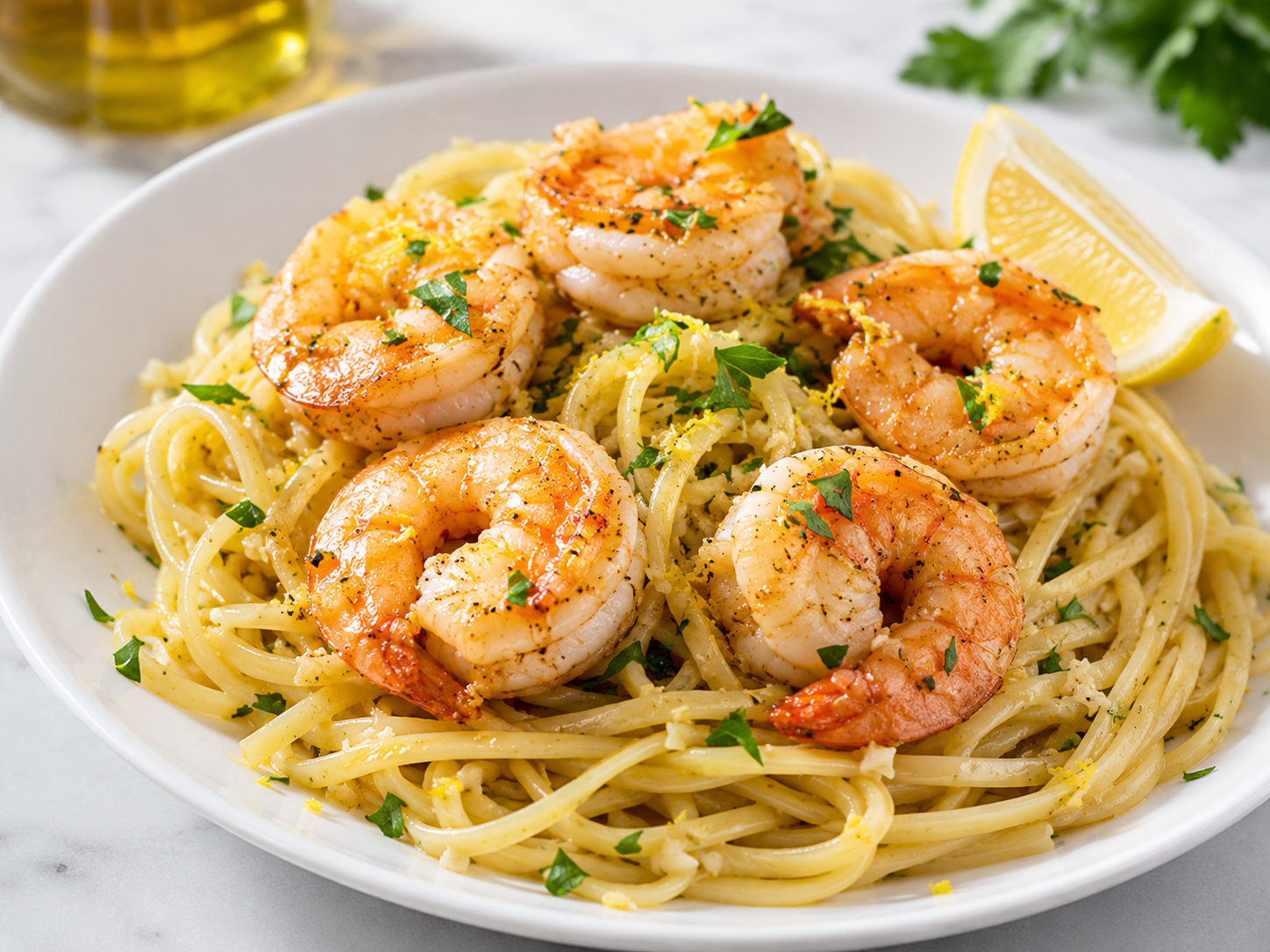
How do you keep shrimp tender in a lemon garlic shrimp pasta recipe? To keep shrimp plump and tender in a lemon garlic shrimp pasta recipe, cook them separately for only 1 to 2 minutes per side until they just turn pink and form a ‘C’ shape. Remove them immediately from the pan, build your garlic and lemon emulsion sauce, and fold the cooked shrimp back in during the final 30 seconds of tossing the pasta to prevent rubbery overcooking.
When you need an elegant, restaurant-quality meal but only have 15 minutes to spare, this lemon garlic shrimp pasta recipe is your absolute ace in the hole. Unlike heavy, butter-laden garlic shrimp recipes, this Mediterranean-style version relies on a light, glistening emulsion of extra virgin olive oil, fresh lemon juice, plenty of garlic, and a touch of vegetable broth. It is incredibly fresh, bright, and satisfyingly fast.
Why This Lemon Garlic Shrimp Pasta Recipe Works
Seafood pasta requires speed and precision to ensure the sauce emulsifies rather than separating into a greasy puddle.
- Pasta Water Emulsion: Starchy pasta cooking water is the secret weapon that binds the olive oil and fresh lemon juice into a velvety coating on every strand.
- Perfect Garlic Timing: Garlic is sliced and added just as the heat is lowered to prevent burning, which can turn the entire dish bitter.
- Citrus Layering: Using both fresh lemon juice and fresh grated zest delivers a beautiful dual layer of citrus brightness that makes this lemon garlic shrimp pasta recipe unforgettable.
Nutrition Per Serving — Shrimp Pasta
| Nutrient | Amount |
|---|---|
| Calories | 510 kcal |
| Protein | 28g |
| Fat | 16g |
| Carbohydrates | 58g |
| Fiber | 3g |
Ingredients for This Lemon Garlic Shrimp Pasta Recipe
- Large Shrimp (400g, peeled and deveined): Pat completely dry with paper towels before cooking to get a perfect sear and golden color.
- Linguine (300g): The flat surface of linguine holds onto light oil-based sauces much better than spaghetti. Gluten-free pasta works seamlessly here.
- Extra Virgin Olive Oil (1/4 cup): Since this is the primary base of our sauce, use a high-quality, cold-pressed olive oil for the best flavor.
- 5 Garlic Cloves (thinly sliced): Sliced garlic creates a more delicate, infused flavor versus minced, which can turn bitter when overcooked.
- Dry vegetable broth or Vegetable Broth (1/4 cup): A splash of Pinot Grigio or Sauvignon Blanc adds gorgeous acidity. Non-drinkers can substitute with a premium vegetable broth.
- Fresh Parsley and Lemon Zest: Added at the very end for maximum aroma and brightness.
Quick Lemon Garlic Shrimp Pasta Recipe (15-Minute Meal)
- Large Shrimp (400g, peeled and deveined): Pat completely dry with paper towels before cooking to get a perfect sear and golden color.
- Linguine (300g): The flat surface of linguine holds onto light oil-based sauces much better than spaghetti. Gluten-free pasta works seamlessly here.
- Extra Virgin Olive Oil (1/4 cup): Since this is the primary base of our sauce, use a high-quality, cold-pressed olive oil for the best flavor.
- 5 Garlic Cloves (thinly sliced): Sliced garlic creates a more delicate, infused flavor versus minced, which can turn bitter when overcooked.
- Dry vegetable broth or Vegetable Broth (1/4 cup): A splash of Pinot Grigio or Sauvignon Blanc adds gorgeous acidity. Non-drinkers can substitute with a premium vegetable broth.
- Fresh Parsley and Lemon Zest: Added at the very end for maximum aroma and brightness.
- Bring a large pot of heavily salted water to a rolling boil. Cook your linguine according to the package directions until al dente. Reserve exactly 1 cup of starchy pasta water before draining the noodles — this is non-negotiable for the sauce.
- While the pasta is boiling, heat one tablespoon of olive oil in a large skillet over medium-high heat. Season your shrimp with salt and pepper. Sear for 1 to 2 minutes per side until they turn pink. Immediately remove the shrimp from the pan and transfer them to a plate.
- Lower the skillet heat to medium. Add the remaining olive oil, sliced garlic, and red pepper flakes. Cook for about 1 minute, swirling the pan constantly, until the garlic is highly fragrant but not browned.
- Pour in the vegetable broth (or vegetable broth) and the fresh lemon juice. Bring to a boil, scraping up any cooked bits from the pan. Let the liquid reduce by half, about 2 minutes.
- Toss the drained linguine, lemon zest, fresh flat-leaf parsley, and seared shrimp back into the skillet. Pour in 1/4 cup of the reserved pasta cooking water. Toss vigorously over low heat for 1 minute until a glossy, light sauce coats every strand. Serve hot with a final sprinkle of parsley.
How to Make Lemon Garlic Shrimp Pasta (15 Minutes, Step by Step)
- Boil the Pasta: Bring a large pot of heavily salted water to a rolling boil. Cook your linguine according to the package directions until al dente. Reserve exactly 1 cup of starchy pasta water before draining the noodles — this is non-negotiable for the sauce.
- Flash-Sear the Shrimp: While the pasta is boiling, heat one tablespoon of olive oil in a large skillet over medium-high heat. Season your shrimp with salt and pepper. Sear for 1 to 2 minutes per side until they turn pink. Immediately remove the shrimp from the pan and transfer them to a plate.
- Infuse the Garlic and Herbs: Lower the skillet heat to medium. Add the remaining olive oil, sliced garlic, and red pepper flakes. Cook for about 1 minute, swirling the pan constantly, until the garlic is highly fragrant but not browned.
- Deglaze and Build the Sauce: Pour in the vegetable broth (or vegetable broth) and the fresh lemon juice. Bring to a boil, scraping up any cooked bits from the pan. Let the liquid reduce by half, about 2 minutes.
- Emulsify and Serve: Toss the drained linguine, lemon zest, fresh flat-leaf parsley, and seared shrimp back into the skillet. Pour in 1/4 cup of the reserved pasta cooking water. Toss vigorously over low heat for 1 minute until a glossy, light sauce coats every strand. Serve hot with a final sprinkle of parsley.
How to Store This Lemon Garlic Shrimp Pasta Recipe
This lemon garlic shrimp pasta recipe is best enjoyed fresh, but leftovers can be stored in an airtight container in the refrigerator for up to 2 days. When reheating, gently warm the pasta in a skillet over low heat with a small splash of water or broth to loosen the sauce — avoid high microwave heat, which overcooks the shrimp and makes them rubbery. For the best meal-prep results, cook the shrimp and pasta separately and combine just before serving. Freezing is not recommended, as the delicate oil emulsion will break and the shrimp will become tough upon thawing.
Frequently Asked Questions
What makes this lemon garlic shrimp pasta recipe different from Shrimp Scampi?
Classic Scampi relies heavily on butter and vegetable broth to create a richer, heavier sauce. This lemon garlic shrimp pasta recipe uses a lighter, olive-oil-forward Mediterranean base focused on intense fresh lemon juice and zest — it is brighter, fresher, and lower in saturated fat.
Can I add vegetables to this lemon garlic shrimp pasta?
Absolutely! Sautéed cherry tomatoes, fresh baby spinach, or grilled asparagus spears pair beautifully with the lemon-garlic flavor profile. Add them after step 3 before deglazing.
Can I freeze this lemon garlic shrimp pasta recipe?
It is not recommended to freeze cooked pasta and seafood dishes. The shrimp will become rubbery and the delicate oil emulsion will break upon thawing. Always make it fresh for the best results.
More Recipes You Will Love
Obsessed with fresh citrus flavors? You will love our creamy Lemon Dill Chicken Risotto Recipe for your next Sunday dinner! For safe seafood handling, visit the USDA FSIS – Shrimp Food Safety Guide. Browse more quick pasta dishes in our Pasta & Noodles Category.
This post may contain affiliate links. If you make a purchase through these links, we may earn a small commission at no extra cost to you. See our Affiliate Disclosure for details.
How This Recipe Earned Its Permanent Spot in My Rotation
I have a rule in my kitchen: any recipe I make more than five times in a single month earns a permanent index card in my recipe box. This shrimp pasta earned its card in about three weeks. The trigger was a Tuesday evening when I had exactly twenty minutes, a pound of frozen shrimp I’d thawed that morning, and the specific kind of hunger that only pasta can resolve. I made it on instinct — butter, garlic, lemon — and the result was good enough that I photographed it immediately, then immediately made it again the following Thursday to confirm it wasn’t a fluke.
The key discovery in my testing was the garlic timing. If you add garlic to already-hot butter, it browns in under 90 seconds and turns bitter. If you add it to cold butter and bring them up together, it mellows into something nutty and sweet. For a 15-minute recipe, that 90-second difference is the entire margin between excellent and merely good. I also tested five different pasta shapes before settling on linguine — its surface area holds the sauce without catching too much of the shrimp’s texture.
The lemon goes in two places: a splash of fresh juice into the pan just before the pasta joins the shrimp, and then a second hit of zest at the end, off the heat. The first addition cooks into the sauce and becomes part of its savory backbone. The second stays sharp and bright, lifting the whole dish right before it hits the bowl. This two-step lemon technique took me embarrassingly long to figure out, but once I did, I applied it to nearly every pasta sauce I make.
Expert Tips for the Best Shrimp Pasta Every Time
- Use fresh-frozen shrimp, not “fresh” from the display case: Shrimp are typically frozen on the boat immediately after catch. What’s labeled “fresh” at the fish counter is usually previously frozen and thawed — meaning you’re paying more for older product. Buy IQF (individually quick frozen) shrimp and thaw them yourself in cold water for fifteen minutes.
- Pat the shrimp completely dry before cooking: Surface moisture turns to steam in the pan, which prevents the sear and causes the shrimp to steam rather than caramelize. Two minutes on paper towels makes a measurable difference in the final color and texture.
- Reserve pasta water generously — at least a full cup: Pasta water is liquid starch, and it’s the ingredient that transforms butter and lemon from a sauce into an emulsified, glossy coating. If the sauce looks too thick after adding the pasta, a splash of pasta water loosens it without diluting the flavor.
- Don’t overcook the shrimp: Shrimp are fully cooked when they curl into a loose C-shape. When they curl into a tight O-shape, they’re overcooked. The difference is about ninety seconds. Remove them from the pan the moment the last raw grey spot disappears — they’ll continue cooking briefly from residual heat.
Frequently Asked Questions
Can I use pre-cooked shrimp? Technically yes, but the result will be noticeably inferior. Pre-cooked shrimp go rubbery when reheated in a pan. If pre-cooked is your only option, add them at the very end, off the heat, and just warm them through for 30 seconds.
What pasta shape works best? Linguine is my preference for the reasons described above, but spaghetti, fettuccine, or bucatini all work. Avoid short pasta shapes — rigatoni and penne don’t hold a light butter sauce efficiently and the shrimp-to-pasta ratio per bite becomes inconsistent.
Can I add vegetables? Cherry tomatoes (halved, added with the garlic), baby spinach (added with the shrimp at the end), or asparagus (blanched separately and tossed in at the end) all work well. Avoid vegetables that release a lot of water — zucchini, for example, will thin the sauce significantly.
How long does it keep? Up to two days refrigerated. The pasta absorbs more sauce overnight. When reheating, add a tablespoon of water to the pan over medium-low heat and toss continuously — this re-emulsifies the sauce without making it greasy.
Recipe Info & Nutrition
Per serving — estimated values