
The Ultimate Miso Caramelized Onion Ramen Recipe: Viral 30-Minute Flavor Explosion
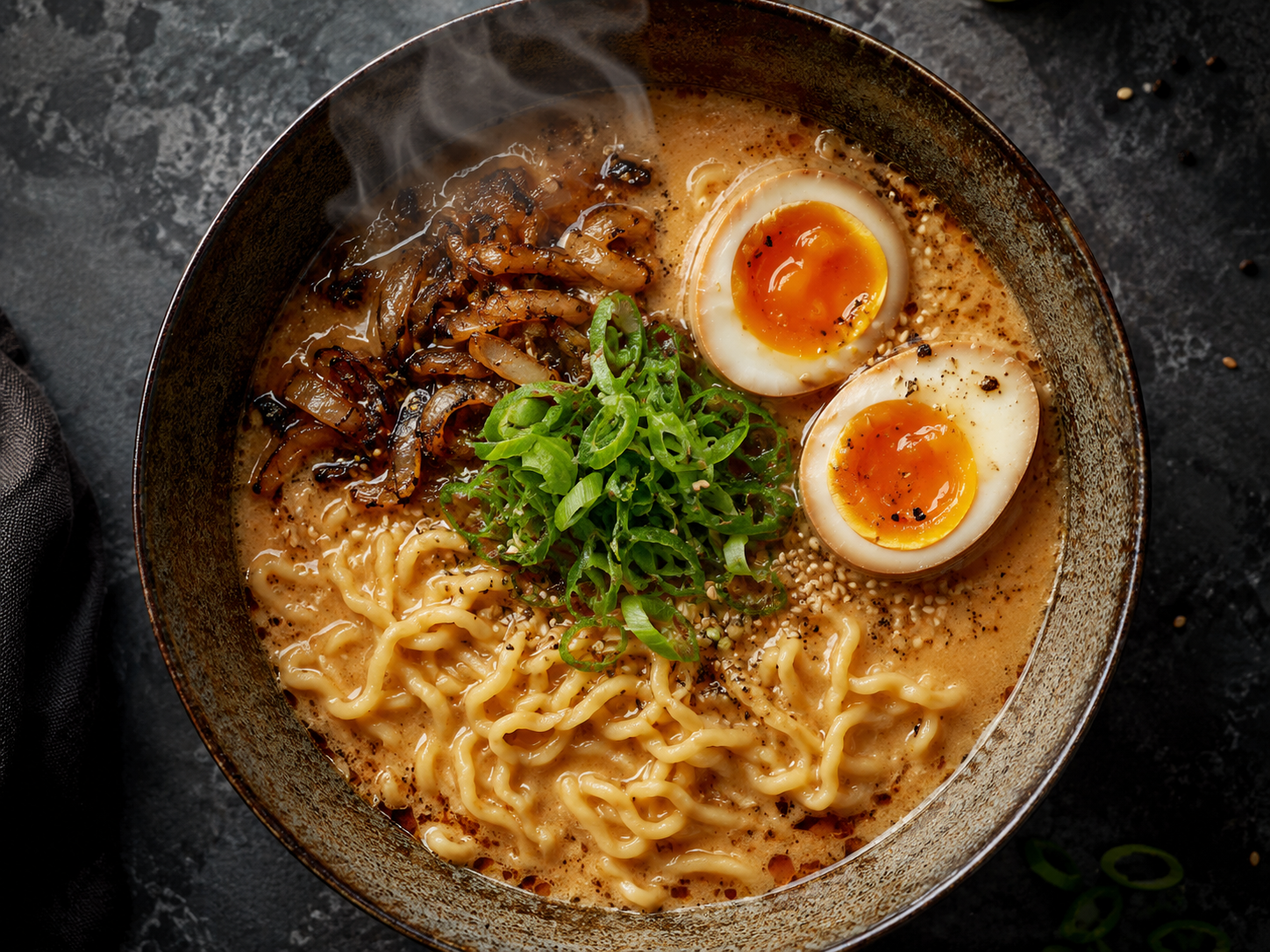
Traditional ramen broths require hours, if not days, of slow-simmering bones to achieve premium depth. However, this brilliant miso caramelized onion ramen recipe completely breaks the mold. The fusion of traditional Japanese miso paste and slow-caramelized sweet onions yields a broth so rich, complex, and velvety that it tastes like it sat on a restaurant stove for 24 hours. It is the perfect cozy, soul-warming weeknight dinner solution.
The 30-Minute Ramen That Tastes Like It Simmered All Day
- Incredible Umami Depth: A magnificent balance of sweet, salty, and savory flavors that coat your palate.
- True Express Ramen: Gourmet restaurant quality at home without spending hours in the kitchen.
- Simple Pantry Staples: No exotic ingredients required; everything is available at any local grocery store.
Ingredients for the Miso Caramelized Onion Ramen Recipe
| Ingredient | Amount (For 2 Servings) | Substitution / Chef Note |
|---|---|---|
| Large yellow onions | 2 pieces (sliced thin) | Red onions work, but yellow onions deliver optimal sweetness |
| White or red miso paste | 2 tbsp | Shiro (white) miso offers a mild, balanced flavor profile |
| Fresh or dried ramen noodles | 2 portions (approx. 150 g) | Udon or high-quality wheat noodles can substitute in a pinch |
| Vegetable or beef broth | 750 ml | Choose low-sodium broth since miso paste is naturally salty |
| Fresh garlic & ginger | 1 clove / 1 tsp grated | Fresh aromatics are mandatory for this broth base |
| Sesame oil & soy sauce | 1 tbsp each | Brings essential aromatic finishing notes together |
Miso is one of Japan’s oldest fermented staples. According to Healthline, it is naturally rich in probiotics and may benefit gut health. For background on the origin and varieties of this paste, see the Wikipedia entry on miso.
How to Make Miso Caramelized Onion Ramen (Step by Step)
- Caramelize Onions: Heat the sesame oil in a deep pot over medium heat. Add the sliced onions and cook, stirring occasionally, for 12–15 minutes until they become deep golden-brown, soft, and fragrant.
- Incorporate Aromatics: Add the freshly grated ginger and minced garlic directly to the caramelized onions. Sauté for 2 more minutes until intensely fragrant.
- Build Soup Base: Stir in the miso paste, letting it toast against the bottom of the pot for 1 minute. Deglaze the pot by pouring in the hot broth and soy sauce. Bring to a boil, then reduce heat to simmer for 8 minutes.
- Cook Noodles: In a separate pot, boil your ramen noodles according to the package directions until al dente. Drain and divide the noodles directly into two large ramen bowls.
- Assemble & Serve: Ladle the boiling miso-onion broth and plenty of tender onions over the noodles. Garnish immediately with fresh scallions, toasted sesame seeds, and a soft-boiled jammy egg.
Common Mistakes & Pro-Tips
The most frequent error when attempting this miso caramelized onion ramen recipe is rushing the onion caramelization process. Cranking up the heat to speed things along will scorch the edges of the onions, making them unpleasantly bitter instead of sweet. Give them the time they need to sweat and develop natural sugars. Beyond that, a professional culinary secret: never let miso paste boil aggressively for long periods. Excess heat breaks down the intricate flavor compounds and the active enzymes; stir it in gently right before deglazing.
More Asian-Inspired Comfort Recipes
Crazy about deep Asian profiles? Don’t miss our fast and savory Spicy Peanut Noodles, our gluten-free Rice Paper Noodles for lighter nights, and a velvety Roasted Butternut Squash Soup for the colder months.
Frequently Asked Questions
What type of miso paste is best suited for ramen?
White miso paste (Shiro Miso) is excellent for home cooks, providing a smooth, sweet, and approachable umami background.
Can I adapt this viral miso caramelized onion ramen recipe to be fully vegan?
Easily! Use a robust vegetable broth and omit the soft-boiled egg topping during presentation.
Where can I buy authentic ramen noodles?
Most modern grocery stores carry them in the dedicated international or Asian aisle, both in dried blocks and fresh vacuum packs.
Can I prepare the soup broth ahead of time?
Yes, the broth flavors actually meld and intensify overnight. Reheat the broth and cook your noodles fresh right before eating.
How should I slice the onions for the best texture?
Slice them thin from root to stem (along the grain) so they maintain a pleasant bite throughout the simmering process.
According to the USDA FSIS seafood guidelines, fish should be cooked to an internal temperature of 145°F for food safety.
This post may contain affiliate links. If you make a purchase through these links, we may earn a small commission at no extra cost to you. See our Affiliate Disclosure for details.
My Ramen Testing Diary: What Went Wrong and What Finally Worked
Miso Caramelized Onion Ramen entered my kitchen after I found myself craving that specific restaurant broth depth — rich, umami-layered, with a slight sweetness — at 10pm on a weeknight when no delivery would arrive in time. My first attempt was too sweet. The second was too salty. The third attempt, I caramelized the onions properly for the first time — a full 25 minutes over medium-low heat, not the five minutes most weeknight recipes pretend is enough — and the difference was so dramatic that I sat with the bowl for a minute before eating it just to process what had happened.
The miso goes in last, after the heat is off. This is the most important instruction in the recipe and the one most people skip. Boiling miso destroys a significant portion of its probiotic content and, more practically, it dulls the flavor. Miso added to barely-simmering broth — about 80°C (175°F), which is just below a visible simmer — blooms into the liquid without losing its complexity. I tested this side by side with miso added at a full boil, and the off-heat version has a noticeably brighter, more layered taste.
I’ve made this ramen on weeknights, for Sunday meal prep, and once at midnight after a particularly long workday when I needed something warming and substantial. It takes 30 minutes, which is about the same time as delivery plus the wait at the door. The soft-boiled ramen egg is optional but transforms the bowl from very good to genuinely exceptional — the jammy yolk breaking into the broth is something I look forward to from the moment I put the pot on the stove.
The Details That Make This Ramen Exceptional
- Caramelize the onions properly — 25 minutes minimum: The Maillard reaction and caramelization that give the onions their deep, sweet complexity require sustained medium-low heat for a full 25 minutes. At five minutes, they’re softened. At fifteen, they’re golden. At twenty-five, they’re transformed. Rushing this step is the most common reason this recipe doesn’t reach its potential.
- Choose the right miso: White miso (shiro miso) is mild, sweet, and integrates easily into the broth. Red miso (aka miso) is more intense, fermented longer, and produces a richer, more complex broth. Either works, but red miso requires about 25% less quantity — it’s significantly saltier. I use white for a cleaner flavor and red when I want depth that borders on umami overload (in the best possible way).
- The soft-boiled ramen egg technique: Bring water to a full boil, lower eggs gently, cook exactly 6 minutes and 30 seconds, transfer immediately to an ice bath for 5 minutes. The result is a fully set white with a jammy, orange, barely-runny yolk. Marinate in soy sauce, mirin, and water (1:1:2) for at least 4 hours for the full effect.
- Add toppings while the broth is still hot: Nori softens, mushrooms warm through, corn chars slightly from the steam — all of this happens best when the bowl is piping hot. Cold toppings on hot broth work. Cold broth with cold toppings is just a lukewarm bowl of something that was meant to be warming.
Frequently Asked Questions
Can I make this ramen vegan? Yes. Use vegetable broth (mushroom-based vegetable broth works best for the umami depth), replace the soft-boiled egg with crispy tofu, and ensure your miso is vegan (most are, but some contain dashi). The result is a full-flavored vegan ramen without compromise.
What noodles work best? Fresh ramen noodles from an Asian grocery store produce the most authentic result. Dried ramen noodles work well if fresh aren’t available. Soba or udon can substitute in a pinch, though the texture is noticeably different. Avoid instant ramen noodles — they’re designed for the broth in the packet, not a made-from-scratch base.
Can I meal prep the broth? Yes, and it’s worth doing. The caramelized onion miso broth keeps for five days refrigerated and actually improves on day two. Make a double batch of broth on Sunday, cook fresh noodles each evening, and assemble in under ten minutes on weeknights.
Recipe Info & Nutrition
Per serving — estimated values