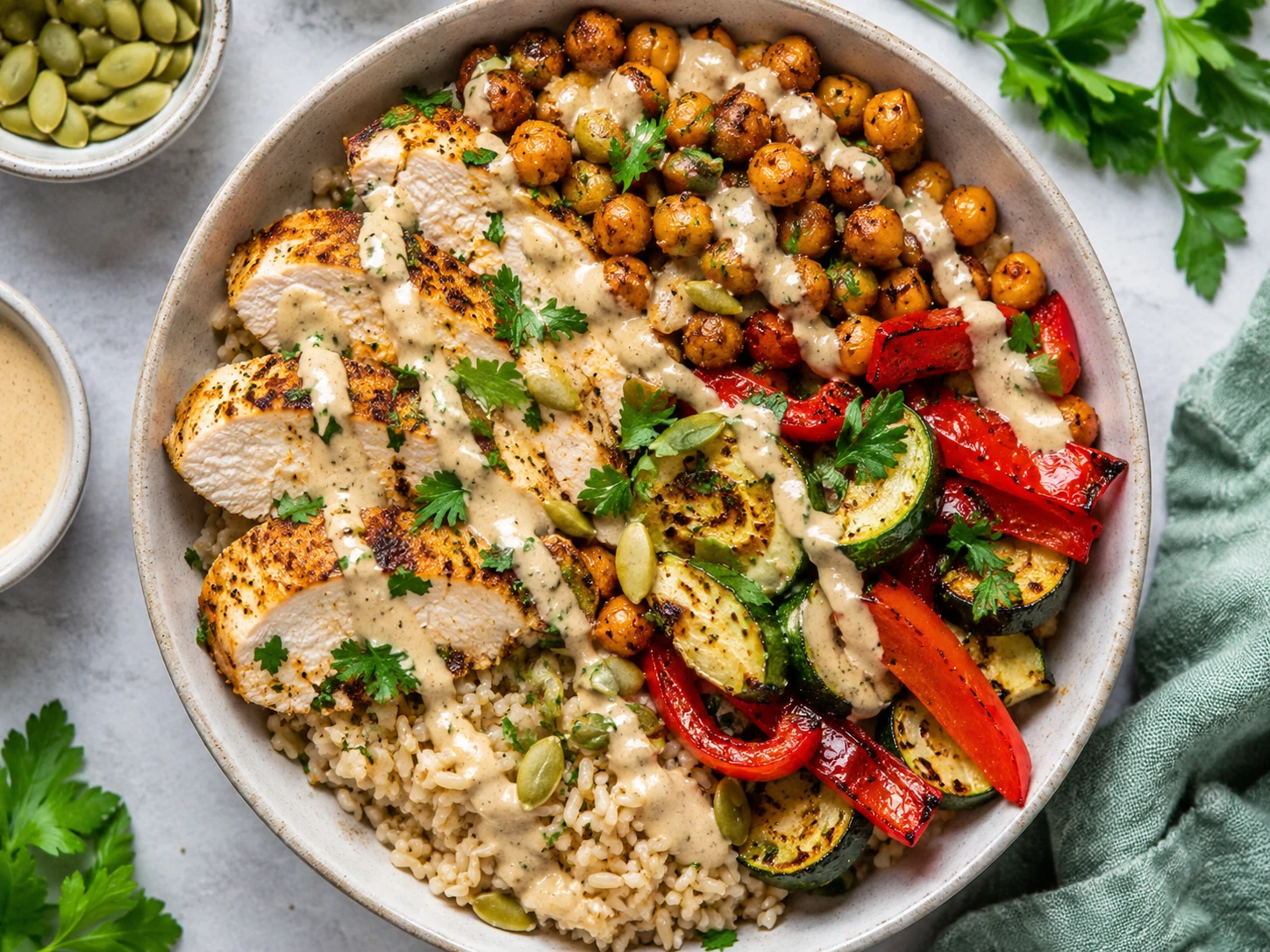
GLP-1 Friendly Chicken Bowl Recipe: High-Protein, High-Fiber & Satisfying

These GLP-1 friendly chicken bowl are a game-changer. GLP-1 friendly meals were not something I thought I needed to understand — until several people close to me started asking what they could actually eat that supported how their medication worked. My first attempt at a “GLP-1 friendly bowl” was technically correct but completely joyless: plain boiled chicken, steamed broccoli, brown rice. It hit all the nutritional markers. It tasted like eating out of obligation.
I went back to the drawing board and asked myself what would make this a meal I’d want to eat regardless of any health goal. The answer: proper seasoning on the chicken, roasted vegetables instead of steamed, a lemon-tahini drizzle, and a crunchy seed topping. Same nutritional profile. Completely different experience.
Whether you’re supporting GLP-1 medication or simply looking for a high-protein, high-fiber meal that genuinely fills you up, this chicken bowl delivers. It’s built around lean protein, fiber-rich legumes and vegetables, and healthy fats — all nutrients that work with your body’s natural fullness signals. It takes 25 minutes, uses one pan for the chicken, and the whole thing comes together while the rice cooks.
Why This GLP-1 Friendly Chicken Bowl Works
- High protein, slow digestion: 30+ grams of protein per bowl from chicken and chickpeas. Protein is the nutrient most strongly associated with satiety and appetite regulation.
- Two fiber sources: Chickpeas and roasted vegetables together deliver 12–15g of fiber per bowl — fiber slows gastric emptying and supports the gut microbiome, both relevant to GLP-1 function.
- No processed carbs: Brown rice instead of white, no refined flour or sugar. The glycemic response is significantly lower, which matters for blood sugar stability.
- Healthy fat from tahini: The lemon-tahini drizzle adds flavor and satiety-supporting fats without weighing down the bowl.

Ingredients for This GLP-1 Friendly Chicken Bowl
- 2 chicken breasts (about 400g), sliced thin
- 1 can chickpeas (400g), drained and rinsed
- 1 zucchini, diced
- 1 red bell pepper, sliced
- 150g cherry tomatoes
- 150g cooked brown rice (or quinoa)
- 2 tablespoons olive oil
- 1 teaspoon cumin, 1 teaspoon smoked paprika, ½ teaspoon garlic powder
- Salt and pepper
- Lemon-tahini drizzle: 2 tablespoons tahini, juice of 1 lemon, 1 clove garlic minced, water to thin
- Topping: pumpkin seeds, fresh parsley, lemon wedge
How to Make a GLP-1 Friendly Chicken Bowl
- Roast the vegetables and chickpeas: Toss zucchini, bell pepper, tomatoes, and chickpeas with 1 tablespoon olive oil and a pinch of salt. Spread on a baking sheet and roast at 200°C for 20 minutes until the chickpeas are slightly crispy and vegetables are caramelized at the edges.
- Season and cook the chicken: Toss sliced chicken with remaining olive oil, cumin, paprika, garlic powder, salt, and pepper. Cook in a hot skillet over medium-high heat for 3–4 minutes per side until golden and cooked through. The spice coating should smell like a warm, smoky cloud rising from the pan.
- Make the tahini drizzle: Whisk tahini with lemon juice, garlic, and enough water to create a pourable consistency. Taste — it should be bright and nutty with a clean lemon finish.
- Assemble the bowl: Divide brown rice between bowls, top with roasted vegetables and chickpeas, arrange chicken slices over the top.
- Finish and serve: Drizzle generously with lemon-tahini sauce. Add pumpkin seeds, fresh parsley, and a lemon wedge.

Pro Tips & Variations
- Meal prep friendly: All components keep separately in the fridge for up to 4 days. Assemble bowls fresh and add the tahini drizzle right before eating.
- Boost fiber further: Add ½ avocado per bowl (+5g fiber, +healthy fats) or a handful of shredded cabbage slaw on the side.
- No brown rice? Quinoa has more protein (8g per cup vs. 5g) and slightly more fiber. Cauliflower rice works if you want to reduce carbs further.
- Portion note: For those following GLP-1 medication, smaller portions are often more appropriate — this recipe makes 2 large bowls or 3 moderate ones.
How to Store
Store all components separately in airtight containers in the refrigerator for up to 4 days. The tahini drizzle keeps for 5 days — it will thicken in the fridge, just thin with a splash of water before using. According to the Harvard T.H. Chan School of Public Health, adequate protein intake supports muscle maintenance, metabolic health, and satiety — all priorities for anyone managing their nutrition intentionally. More high-protein meals in our chicken & poultry collection.
Why This GLP-1 Friendly Chicken Bowl Actually Works
GLP-1 medications like semaglutide slow gastric emptying — which means you feel full faster and stay full longer. However, this also means every bite needs to count nutritionally. A GLP-1 friendly chicken bowl built around lean protein, fiber-rich vegetables, and complex carbohydrates gives your body what it needs without the volume that can cause discomfort.
Furthermore, protein is especially important when using GLP-1 medications. Research published by the National Library of Medicine shows that adequate protein intake during caloric restriction helps preserve lean muscle mass — a key concern for anyone losing weight quickly.
Additionally, the fiber from vegetables in this bowl slows glucose absorption, which works synergistically with how GLP-1 medications regulate blood sugar. Consequently, you get steadier energy levels throughout the day instead of the spikes and crashes that come from low-fiber meals.
Meal Prep Tips for GLP-1 Friendly Chicken Bowl
- Batch cook the chicken: Grill or bake 4–6 portions at once. Store in an airtight container for up to 4 days — the chicken works in salads, wraps, and bowls all week.
- Pre-portion your bowls: Assemble 3–4 bowls on Sunday. Keep sauces and dressings separate to prevent sogginess.
- Smaller portions are fine: On GLP-1 medications, you may only manage half a bowl at first. That is completely normal — the nutritional density means you are still getting what you need.
- Reheat gently: Microwave at 70% power with a splash of water to prevent the chicken from drying out. Finally, add fresh herbs after reheating for the best flavor.
For more high-protein meal ideas, browse our main dishes collection — all designed with balanced nutrition in mind.
Why This GLP-1 Friendly Chicken Bowl Actually Works
GLP-1 medications like semaglutide slow gastric emptying — which means you feel full faster and stay full longer. However, this also means every bite needs to count nutritionally. A GLP-1 friendly chicken bowl built around lean protein, fiber-rich vegetables, and complex carbohydrates gives your body what it needs without the volume that can cause discomfort.
Furthermore, protein is especially important when using GLP-1 medications. Research published by the National Library of Medicine shows that adequate protein intake during caloric restriction helps preserve lean muscle mass — a key concern for anyone losing weight quickly.
Additionally, the fiber from vegetables in this bowl slows glucose absorption, which works synergistically with how GLP-1 medications regulate blood sugar. Consequently, you get steadier energy levels throughout the day instead of the spikes and crashes that come from low-fiber meals.
Meal Prep Tips for GLP-1 Friendly Chicken Bowl
- Batch cook the chicken: Grill or bake 4–6 portions at once. Store in an airtight container for up to 4 days — the chicken works in salads, wraps, and bowls all week.
- Pre-portion your bowls: Assemble 3–4 bowls on Sunday. Keep sauces and dressings separate to prevent sogginess.
- Smaller portions are fine: On GLP-1 medications, you may only manage half a bowl at first. That is completely normal — the nutritional density means you are still getting what you need.
- Reheat gently: Microwave at 70% power with a splash of water to prevent the chicken from drying out. Finally, add fresh herbs after reheating for the best flavor.
For more high-protein meal ideas, browse our main dishes collection — all designed with balanced nutrition in mind.
What to Eat With Your GLP-1 Friendly Chicken Bowl
This bowl is complete as a standalone meal, but if you want to round it out further, here are some additions that complement it without overwhelming your appetite:
- A small side salad: Simple greens with lemon and olive oil add volume and micronutrients without heaviness.
- A warm broth: A small cup of vegetable or chicken broth before the meal can help with hydration — important when appetite is reduced.
- Fresh fruit: A few berries or sliced apple after the bowl satisfies sweet cravings with natural sugar and fiber.
As a result of its balanced macros — roughly 35g protein, 8g fiber, and under 500 calories — this GLP-1 friendly chicken bowl fits comfortably into most nutrition plans without requiring any tracking or measuring. Moreover, it is naturally gluten-free and dairy-free, making it accessible for a wide range of dietary needs.
Understanding Nutrition Needs on GLP-1 Medications
When using GLP-1 medications like semaglutide or tirzepatide, appetite is significantly reduced — making every meal an opportunity to prioritize nutrients. However, this also means the risk of under-eating protein is real. This high protein chicken bowl is specifically designed to deliver maximum nutrition in a smaller, comfortable portion.
According to research in the National Library of Medicine, maintaining protein intake of 1.2–1.6g per kilogram of body weight during GLP-1-assisted weight loss is crucial for preserving lean muscle mass. Furthermore, a semaglutide recipe that centers lean protein and fiber — like this glp-1 friendly chicken bowl — supports these targets naturally.
Additionally, the fiber from roasted vegetables in this bowl slows glucose absorption, which works synergistically with how GLP-1 medications regulate blood sugar. As a result, you get steadier energy levels throughout the day. For more glp-1 meal ideas, explore our quick and easy collection.
Frequently Asked Questions
What makes a meal GLP-1 friendly?
GLP-1 friendly meals generally emphasize high protein (to support muscle and satiety), high fiber (to slow digestion and support gut hormones), healthy fats (to support fullness), and minimal processed carbohydrates. Smaller portion sizes with high nutrient density are often recommended alongside GLP-1 medications. This GLP-1 friendly chicken bowl recipe never disappoints.
Can I use chicken thighs instead of chicken breast?
Yes — chicken thighs have more fat and slightly fewer calories from protein, but they’re juicier and harder to overcook. They work beautifully with this spice mix. Slice them thin after cooking for easy bowl assembly. This GLP-1 friendly chicken bowl recipe never disappoints.
Is this bowl good for weight management?
It’s designed to be nutritionally complete and filling without being high in calories — around 480–520 calories per serving with all components. The combination of protein, fiber, and healthy fat supports satiety, which is the main mechanism whether you’re using GLP-1 medication or managing weight through diet alone. This GLP-1 friendly chicken bowl recipe never disappoints.
Did you make this bowl? Let me know what you swapped in the comments — this recipe is very forgiving. More nourishing chicken ideas in our chicken & poultry section. Whether you make these GLP-1 friendly chicken bowl once or every week, the results speak for themselves.