
Easy Kimchi Fried Rice Recipe: Bold, Funky & Ready in 15 Minutes
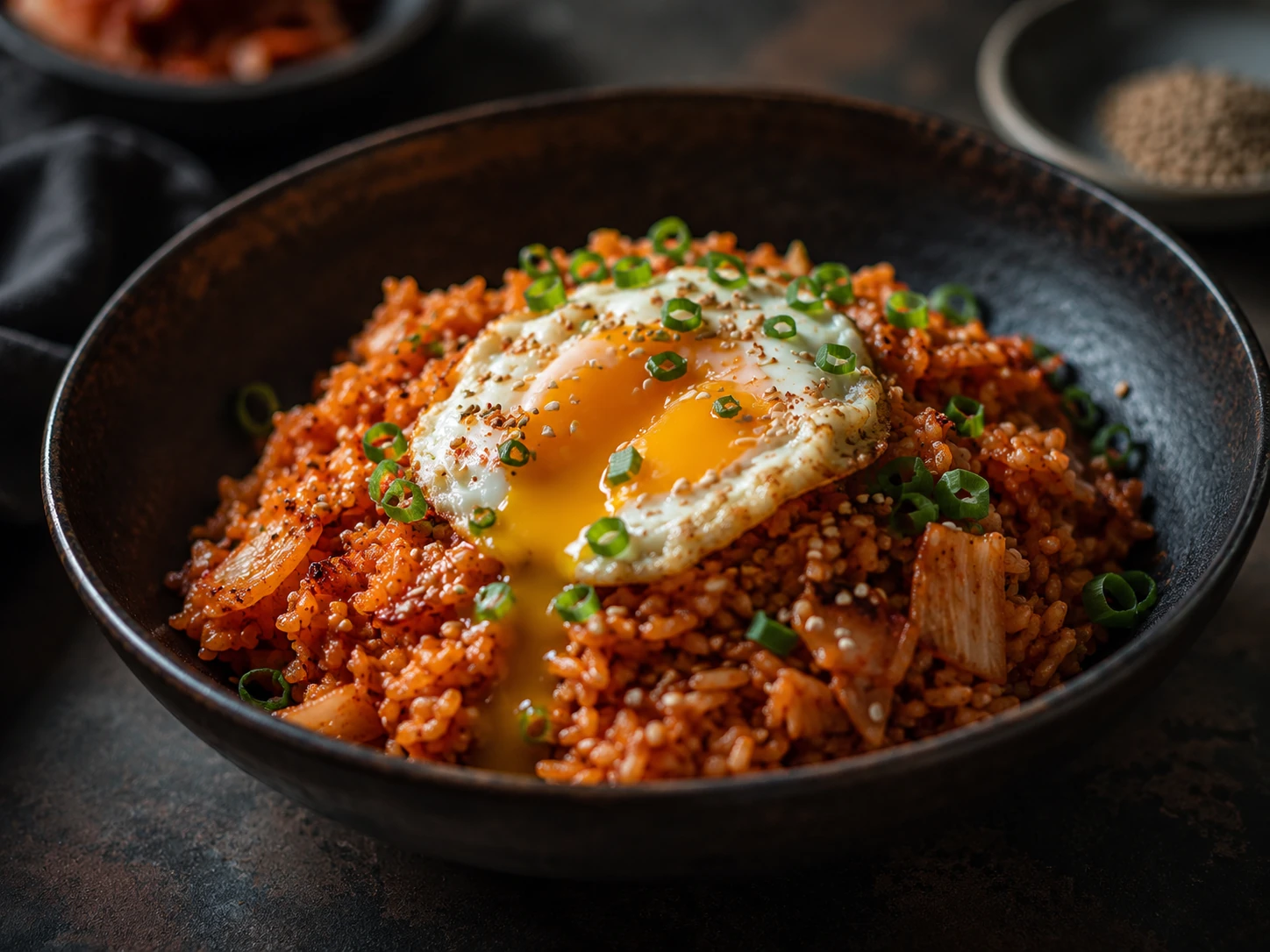
This kimchi fried rice recipe taught me one lesson the hard way: fresh rice is the enemy. My first attempt used rice I’d made an hour earlier, still warm and steaming, and tossed it into a hot wok with kimchi. The result was a pale, gummy, clumped mess that stuck to the pan and had none of the distinct, separated grains that make fried rice satisfying. The flavor was fine. The texture was the problem. I threw it out and made eggs on toast instead. The following day, I used the leftover rice from dinner — cold, slightly dried out, each grain separate — and the difference was immediate. The rice hit the hot pan and sizzled. The grains crisped at the edges. The kimchi caramelized and turned a deep, burnished red. I ate it standing at the stove directly from the wok.
Kimchi fried rice is one of the most efficient, satisfying meals in existence. It uses leftovers. It comes together in 15 minutes. It’s packed with fermented kimchi — one of the most studied probiotic foods available — and it tastes deeply savory, slightly funky, faintly spicy, and entirely addictive. The gut health movement has brought kimchi into the mainstream in 2026, and this recipe is the most immediate, delicious way to use it.
Why This Kimchi Fried Rice Recipe Works
- Day-old rice is essential: Cold, refrigerated rice has lower moisture content and separate grains. Fresh rice steams in the pan instead of frying — and you get glue instead of fried rice.
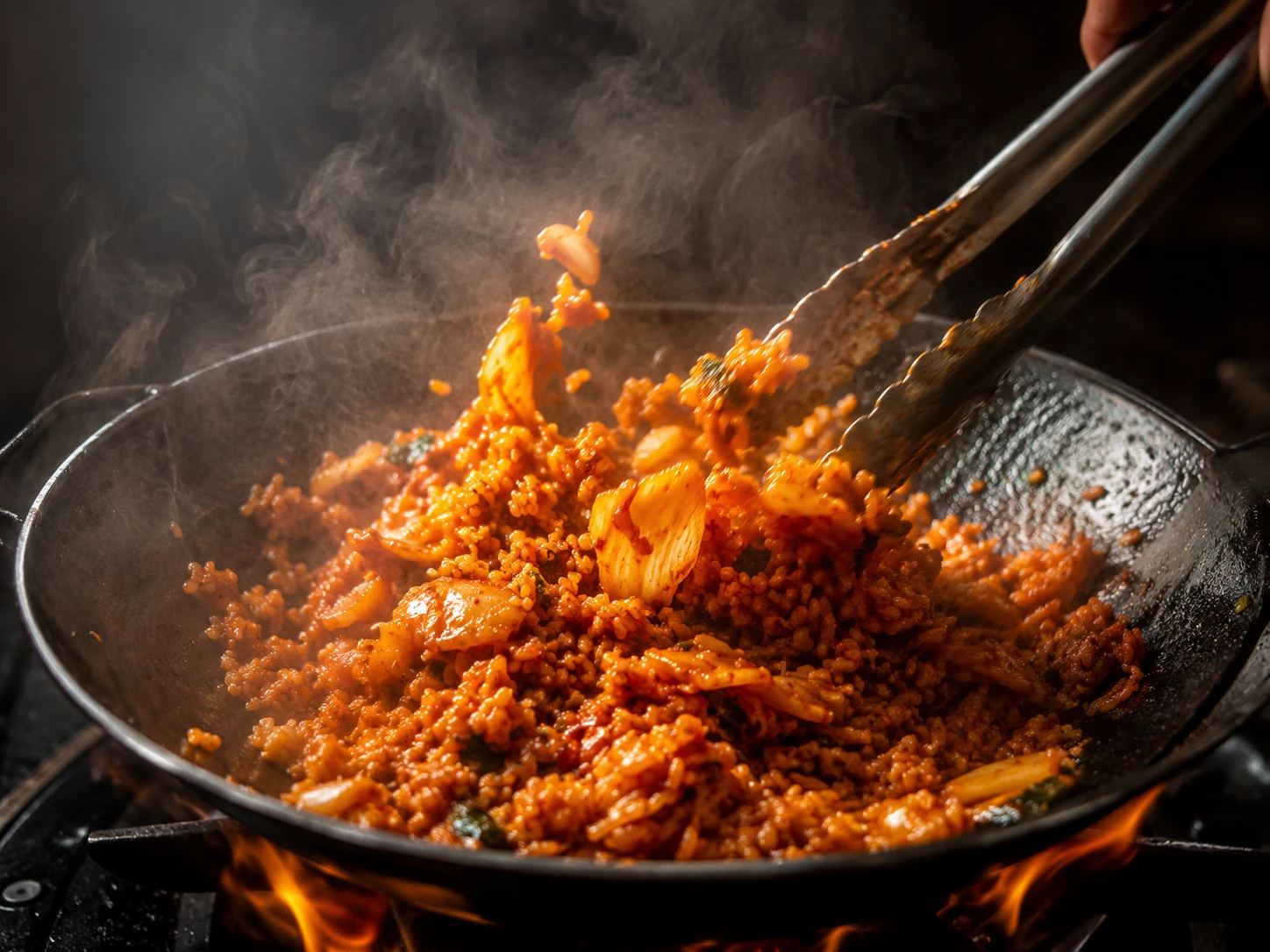
- High heat, fast cooking: Fried rice needs a screaming hot pan. Lower heat means the ingredients steam each other and nothing gets that characteristic char and smokiness.
- The kimchi juice matters: Don’t drain it — stir it into the rice at the end. It coats every grain with fermented, savory flavor and deepens the color to a gorgeous coral-red.
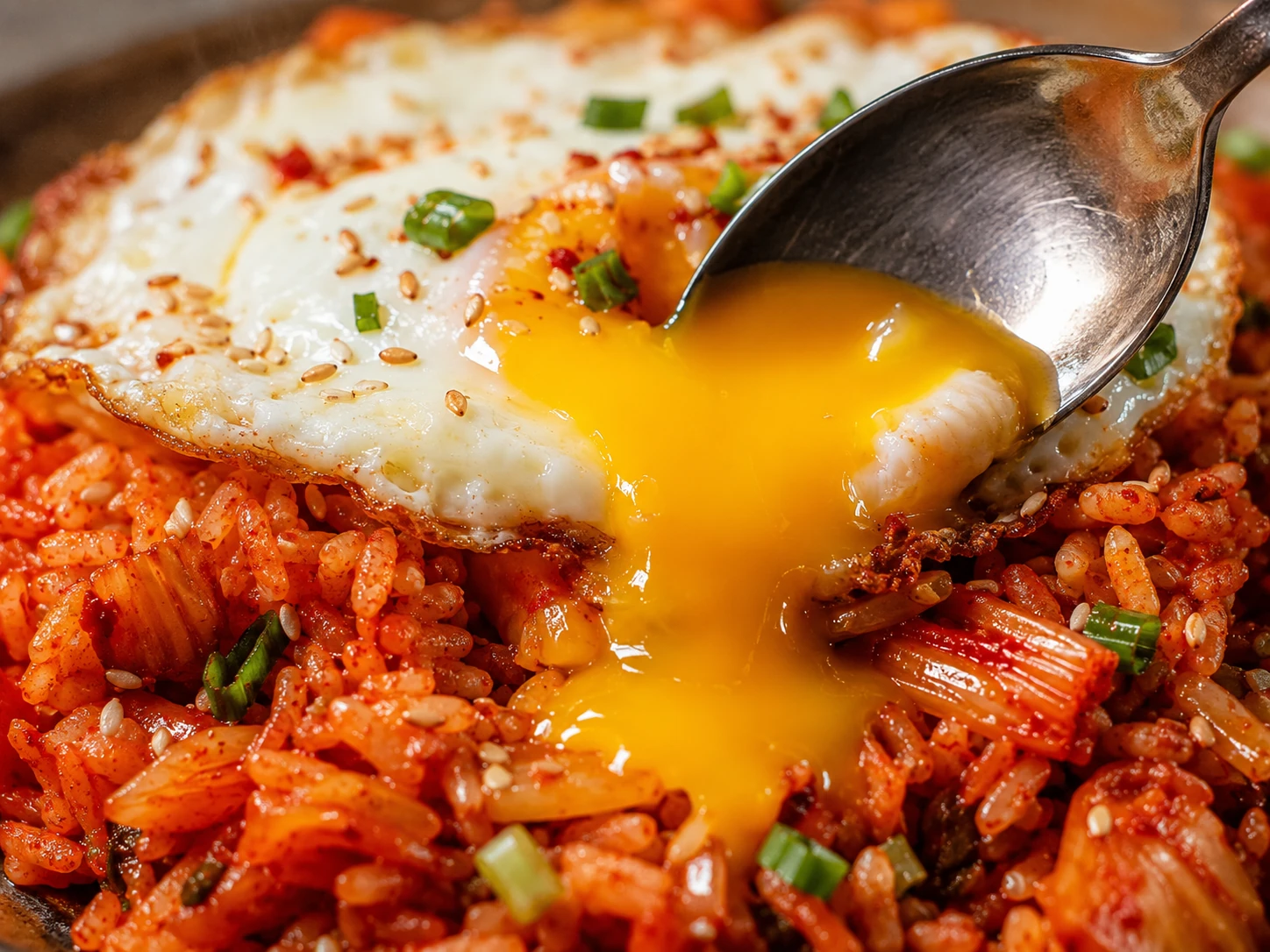
- A fried egg on top: The runny yolk breaks over the rice and acts as a sauce — rich, silky, and exactly what this dish needs to feel complete.
Ingredients for This Kimchi Fried Rice Recipe
- 300g day-old cooked rice (white or brown — must be cold)
- 150g kimchi, roughly chopped + 2 tablespoons kimchi juice
- 2 tablespoons sesame oil
- 3 spring onions, sliced (whites and greens separated)
- 3 garlic cloves, minced
- 1 tablespoon soy sauce
- 1 teaspoon gochujang (Korean chili paste) — optional for extra heat
- 2 eggs (for topping)
- 1 teaspoon toasted sesame seeds
- Nori sheets or crispy onions for topping (optional)
No gochujang? A pinch of chili flakes works. No kimchi juice? Add a splash of rice vinegar instead — the acidity does similar work.
How to Make Kimchi Fried Rice
This kimchi fried rice recipe is equally good for breakfast, lunch, or dinner.
The kimchi fried rice recipe works best with well-fermented kimchi (at least 2 weeks old).
Making this kimchi fried rice recipe in a carbon steel wok produces the most authentic results.
- Heat the pan until very hot. Use a wok or large cast-iron skillet over maximum heat. Add sesame oil — it should shimmer immediately on contact. The oil will smell nutty and toasty, which is exactly right.
- Sauté aromatics: Add spring onion whites and garlic. Stir constantly for 30 seconds — they should sizzle loudly and turn fragrant. Don’t let the garlic go brown.
- Add kimchi: Toss in the chopped kimchi. Stir-fry for 2 minutes until it caramelizes slightly and turns a deeper red. The tangy, funky smell will intensify and fill the kitchen.
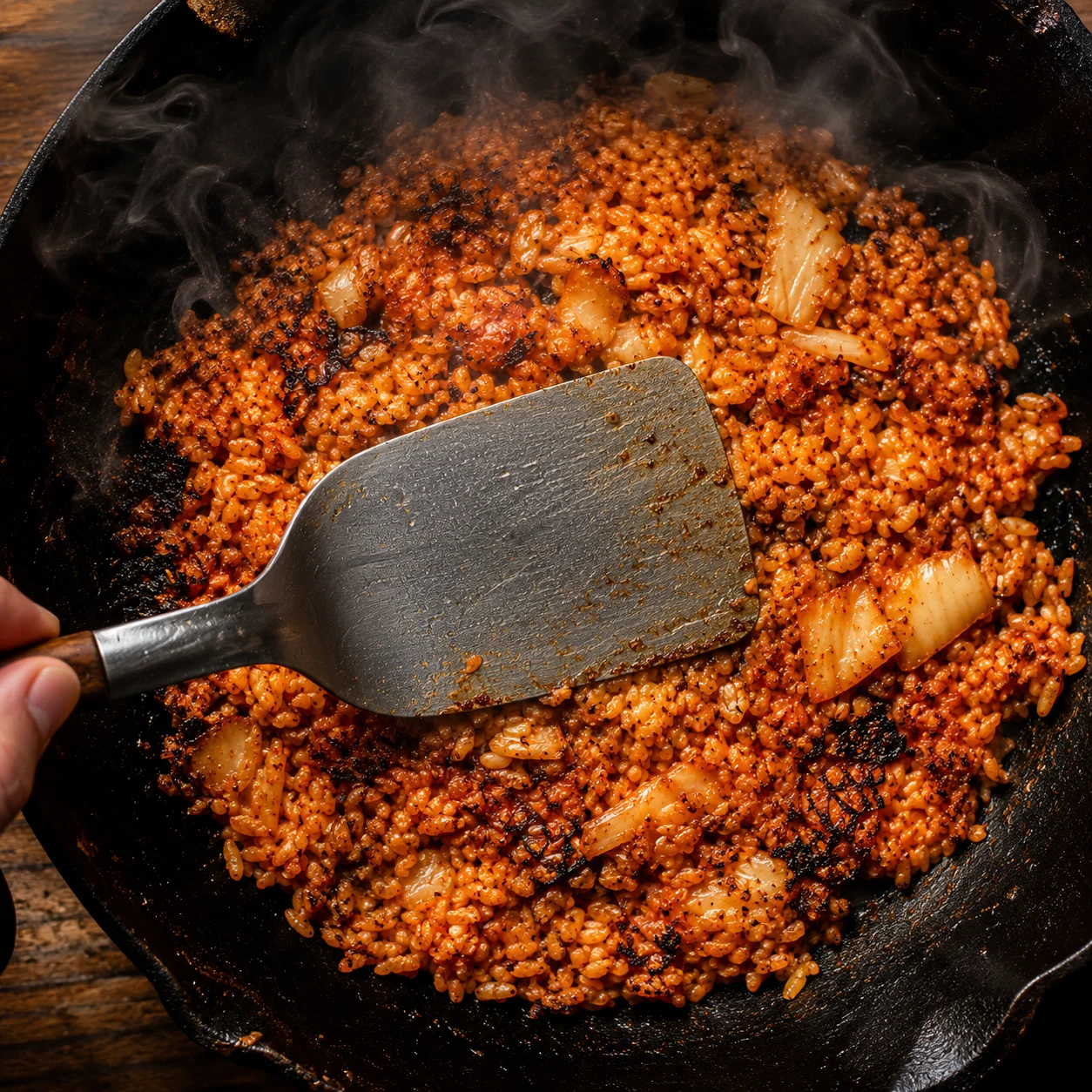
- Add rice: Add cold rice and break up any clumps immediately with a spatula. Press the rice into the pan — let it sit for 30 seconds untouched so it crisps against the hot surface, then stir. Repeat 2–3 times. You want some grains to be golden and slightly crunchy.
- Season and finish: Add soy sauce, gochujang, and kimchi juice. Toss everything together until every grain is coated and the rice turns a uniform coral-red. Remove from heat. Top with a fried egg, spring onion greens, and sesame seeds.
Pro Tips & Variations
- Spam-free protein options: Traditional Korean kimchi fried rice uses Spam. Our version uses a fried egg, but you can also add diced firm tofu (press it dry first), shredded rotisserie chicken, or edamame beans for additional protein.
- Crispy rice technique: After adding the rice, press it flat and don’t touch it for 60 seconds. You’ll hear it sizzling. Flip sections like a pancake for dramatic patches of crispy, toasted rice.
- Make it a full meal: Serve alongside our vegan sides like cucumber salad or pickled vegetables for a complete Korean-inspired spread.
- Vegan version: Skip the egg, add 100g diced firm tofu, and use tamari instead of soy sauce — fully plant-based and just as satisfying.
How to Store Kimchi Fried Rice
Leftover kimchi fried rice keeps in the refrigerator for up to 3 days in a sealed container. Reheat in a hot skillet with a tiny splash of sesame oil — it crisps back up in 2 minutes, which is arguably better than fresh. Microwave reheating works but loses the texture. According to Harvard’s Nutrition Source, fermented foods like kimchi contain beneficial bacteria that support gut microbiome diversity — one of the core health trends of 2026. More Asian-inspired ideas in our vegan & vegetarian section.
The Secret to Restaurant-Quality Kimchi Fried Rice at Home
This kimchi fried rice recipe is one of my favorite recipes to make. The single most important factor in great kimchi fried rice is using day-old rice. Fresh rice contains too much moisture, which causes it to steam rather than fry — resulting in a soft, clumpy texture. However, rice that has been refrigerated overnight loses that excess moisture, allowing each grain to fry separately and develop the crispy edges that make this korean fried rice so satisfying.
Furthermore, the kimchi itself should be well-fermented — at least 2 weeks old — for the best flavor. Young kimchi is milder and crunchier; aged kimchi is more pungent, sour, and deeply savory. Consequently, the flavor profile of your easy kimchi rice will vary depending on which you use. Both work, but aged kimchi produces a more complex final dish.
Kimchi Fried Rice Variations Worth Trying
- Extra protein: Add a fried egg on top — the runny yolk creates a natural sauce that enriches the entire bowl of kimchi fried rice.
- Vegetable additions: Corn, frozen peas, or diced zucchini all work well. Additionally, bean sprouts added at the very end stay crunchy and add textural contrast.
- Spice level: The gochugaru in kimchi provides baseline heat. For more intensity, add a teaspoon of gochujang (Korean chili paste) with the kimchi.
- Sesame finish: A drizzle of toasted sesame oil at the end of cooking is non-negotiable. Furthermore, toasted sesame seeds add both crunch and a nutty aroma.
According to research from the National Library of Medicine, fermented foods like kimchi contain beneficial probiotics associated with improved gut health — making this kimchi fried rice recipe both delicious and genuinely functional.
What to Serve With Kimchi Fried Rice
Kimchi fried rice is a complete meal on its own — however, if you want to build a fuller spread, these accompaniments work particularly well:
- Crispy tofu: Pan-fried until golden, pressed tofu adds protein and contrasting texture alongside the rice. Furthermore, the neutral flavor of tofu balances the bold, tangy kimchi.
- Miso soup: A small bowl of simple miso soup is the traditional Korean and Japanese accompaniment. Additionally, it provides warmth and umami that complements the fermented flavors in the kimchi fried rice.
- Cucumber salad: Thinly sliced cucumber with rice vinegar and sesame oil cuts through the richness of the fried rice. As a result, each bite of rice feels lighter and more refreshing.
- Steamed edamame: A simple protein addition that requires almost no preparation. Consequently, the entire meal comes together in under 20 minutes.
Finally, leftover kimchi fried rice reheats well in a hot pan with a tiny splash of water — always better than microwaving, which softens the crispy edges. Moreover, the flavor actually intensifies overnight as the kimchi continues to ferment slightly in the cooked rice.
How to Achieve the Perfect Texture in Kimchi Fried Rice
The key to restaurant-quality kimchi fried rice is using cold, day-old rice. Freshly cooked rice contains too much moisture and will steam rather than fry, resulting in a sticky, clumped dish instead of individual, slightly crispy grains. Additionally, high heat is non-negotiable — your wok or skillet needs to be properly smoking before the rice goes in. However, if your stove isn’t particularly powerful, cook the rice in two smaller batches rather than one large one. Furthermore, pressing the rice flat against the pan for 60 seconds without stirring creates those coveted crispy bottom bits. Finally, the kimchi itself should be roughly chopped before adding — smaller pieces distribute flavor more evenly throughout the dish.
This kimchi fried rice recipe can be made completely vegan by omitting the egg and using tamari.
The kimchi fried rice recipe doubles easily — just make sure your pan is large enough.
Once you’ve made this kimchi fried rice recipe from scratch, take-out versions taste flat by comparison.
Frequently Asked Questions
Why is day-old rice important for kimchi fried rice?
Cold, day-old rice has lost most of its moisture — the grains are dry, firm, and separate easily. Fresh rice is still steaming and sticks together in clumps. In a hot pan, fresh rice steams instead of fries, giving you a mushy texture instead of distinct, slightly crispy grains. Always use rice that’s been refrigerated for at least 8 hours.
Is kimchi fried rice healthy?
Yes — it’s a nutritionally complete, relatively low-calorie meal. Kimchi adds fermented probiotics and vitamins C and K. Rice provides carbohydrate energy. The egg adds protein. Sesame oil provides healthy fats. It’s far more nutritious than most takeout fried rice, which uses significantly more oil and often MSG.
How spicy is kimchi fried rice?
It depends on your kimchi — Korean kimchi ranges from mild to very spicy. Store-bought kimchi in most Western supermarkets tends to be medium-mild. The gochujang adds extra heat but is optional. Start without it, taste, and add a teaspoon if you want more kick.
Tell me your rice game — did you do the crispy press technique? Did you add the egg? Drop it in the comments. More bold flavors in our vegan & vegetarian collection.