
Ceuta-Style Cuscús: Lamb Couscous Recipe
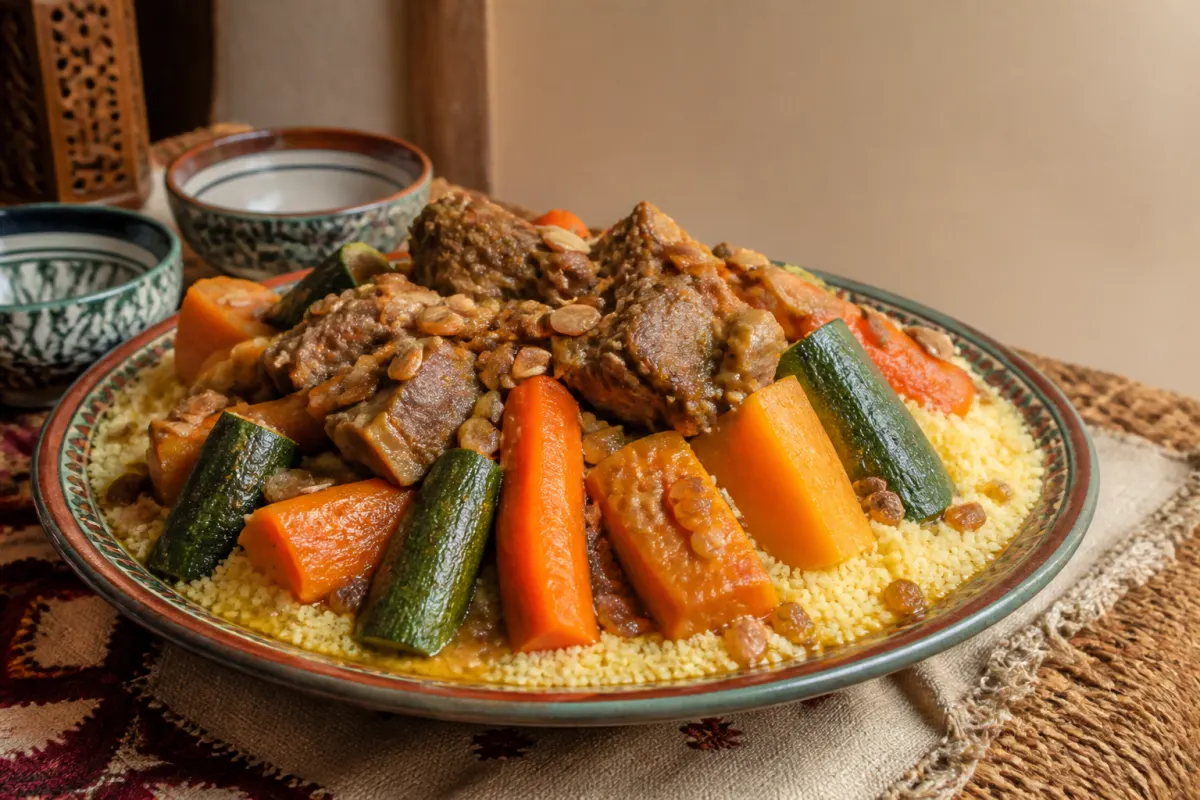
Cuscús is one of the clearest expressions of Ceuta’s location and cultural ties. The Spanish city sits in North Africa beside Morocco, and couscous is a familiar part of its food culture. This home-style version pairs steamed semolina with a slow-cooked lamb and vegetable stew.
Image disclosure: The food images in this article are AI-generated illustrations. They are provided as visual references; actual ingredients, preparation, and results may vary.
Key takeaways
- Cuscús combines steamed semolina grain with a slow-cooked stew, traditionally made with lamb and root vegetables.
- In Ceuta, the dish reflects the city’s close cultural and culinary ties to neighboring Morocco.
- In many Muslim households, couscous is prepared for a shared Friday meal, although customs differ by family.
- The semolina and the stew are cooked separately, then combined at the end – not boiled together.
Not just semolina – a full ritual
A common misunderstanding is treating cuscús as just a type of grain. In its traditional form, it’s a complete cooking method: semolina steamed over a simmering stew so it absorbs the aromas rising from below, traditionally using a two-part pot called a couscoussier. In Ceuta and across the Maghreb, cuscús has long been associated with Friday meals and with hospitality – a dish made in quantities meant for sharing, not eating alone.
Cuscús Recipe (Serves 4-6)
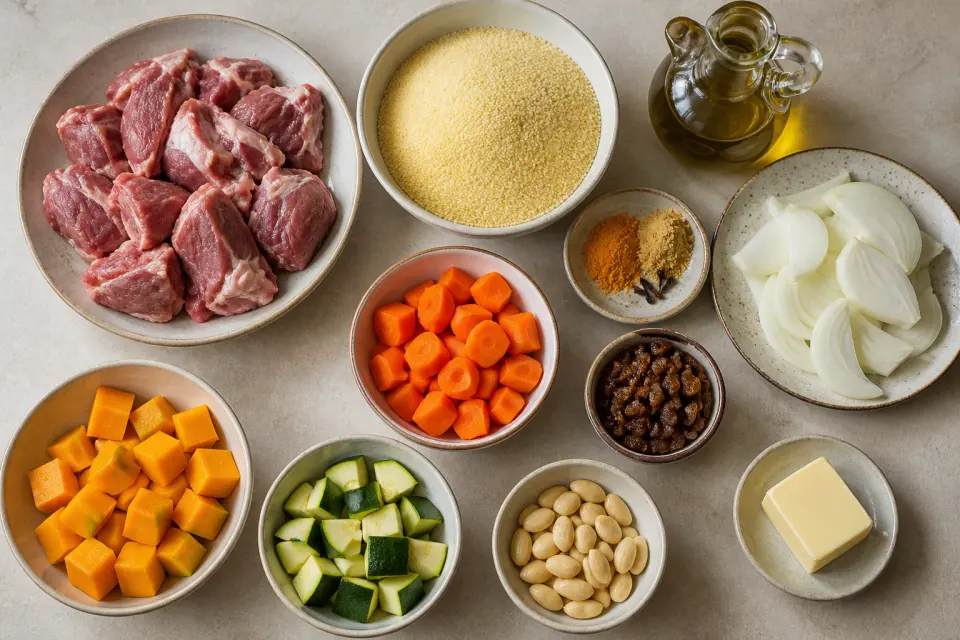
Ingredients
For the stew:
- 600 g lamb, cut into large chunks (shoulder or leg works well)
- 2 onions, sliced
- 2 carrots, cut into chunks
- 1 small pumpkin or zucchini, cut into chunks
- 1 tsp ground turmeric
- 1 tsp ground ginger
- 1/2 tsp freshly ground black pepper
- 2 tbsp olive oil
- 1.5 liters water or stock
- Salt, to taste
- A handful of raisins
- A handful of almonds, toasted
For the semolina:
- 400 g couscous semolina
- 2 tbsp olive oil
- Salt, to taste
- Warm water, as needed
- A few knobs of butter
Method
- Heat the olive oil in a large pot and brown the lamb pieces on all sides.
- Add the sliced onions and cook until softened.
- Stir in the turmeric, ginger, and black pepper, then add the water or stock and salt.
- Simmer, covered, for about 40 minutes, until the lamb starts to become tender.
- Add the carrots and pumpkin or zucchini, and continue cooking for another 20-25 minutes.
- While the stew cooks, prepare the semolina: place it in a wide bowl, drizzle with olive oil and a pinch of salt, and rub it between your hands to coat every grain.
- Sprinkle warm water over the semolina a little at a time, fluffing with a fork so it doesn’t clump, until it’s evenly moistened.
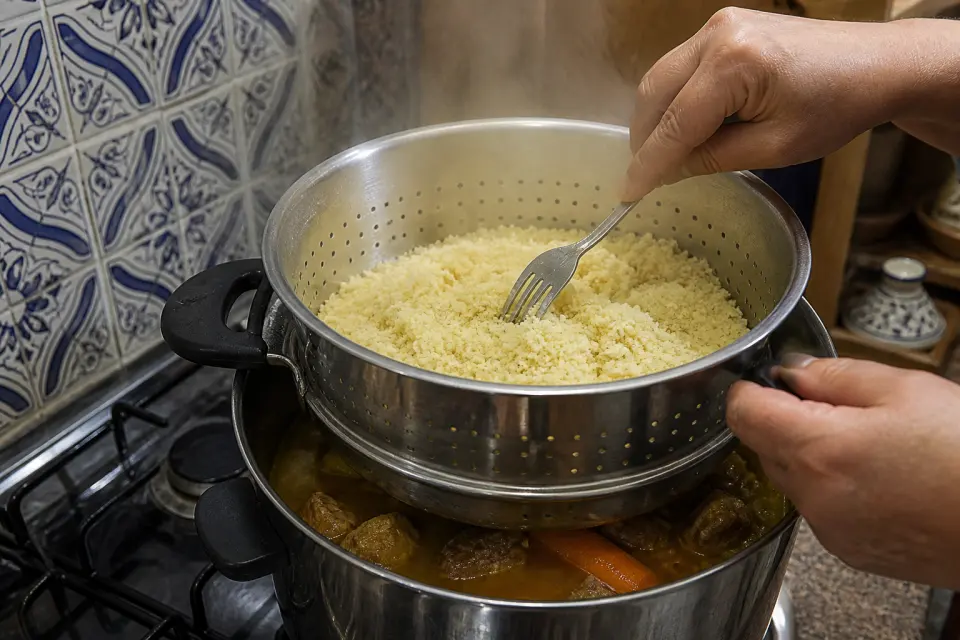
- Steam the semolina over the simmering stew (using a couscoussier, or a sieve set over the pot) for about 15-20 minutes, until it’s tender and light.
- Fluff the steamed semolina with a fork and a knob of butter, then transfer it to a large serving platter.
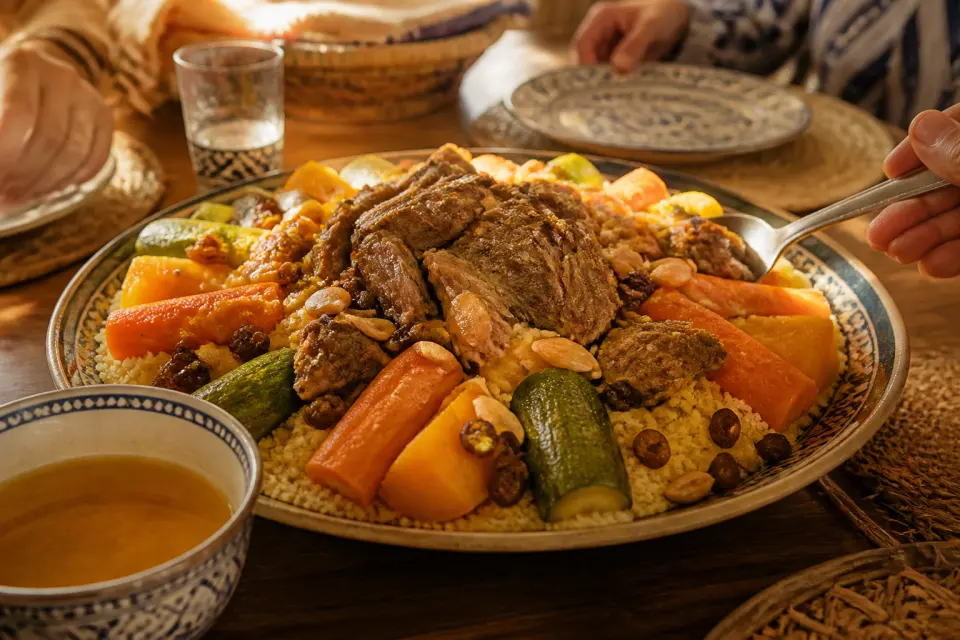
- Arrange the meat and vegetables over the semolina, spoon some of the broth on top, and finish with raisins and toasted almonds.
A dish that carries meaning
In Ceuta, cuscús isn’t just a weeknight meal – it’s tied to gathering, generosity, and the city’s layered history of coexisting communities. That’s part of why so many families still make it the traditional way, even when a quicker instant version is available at any supermarket.
Cuscús pairs well on a Ceuta-inspired menu with pollo a la moruna, which shares many of the same spices. For the bigger picture on the region’s cuisine, see our guide to Ceuta’s traditional dishes.
Frequently Asked Questions
Can cuscús be made with chicken instead of lamb? Yes. Chicken is a common substitute and cooks faster – reduce the simmering time for the meat to around 25-30 minutes before adding the vegetables.
Do I have to use a couscoussier? No. A fine sieve or colander set over the simmering pot, covered loosely, works as a practical substitute at home.
Why is my semolina clumping instead of fluffing? This usually happens when too much water is added at once. Sprinkle it in gradually and fluff continuously with a fork so the grains separate instead of sticking together.
Is cuscús always served with meat? No. Vegetable-only versions are common too, especially for those who don’t eat meat, using the same semolina technique with a vegetable-based stew.