
Soft and Chewy Chocolate Chip Cookies (No Cornstarch)
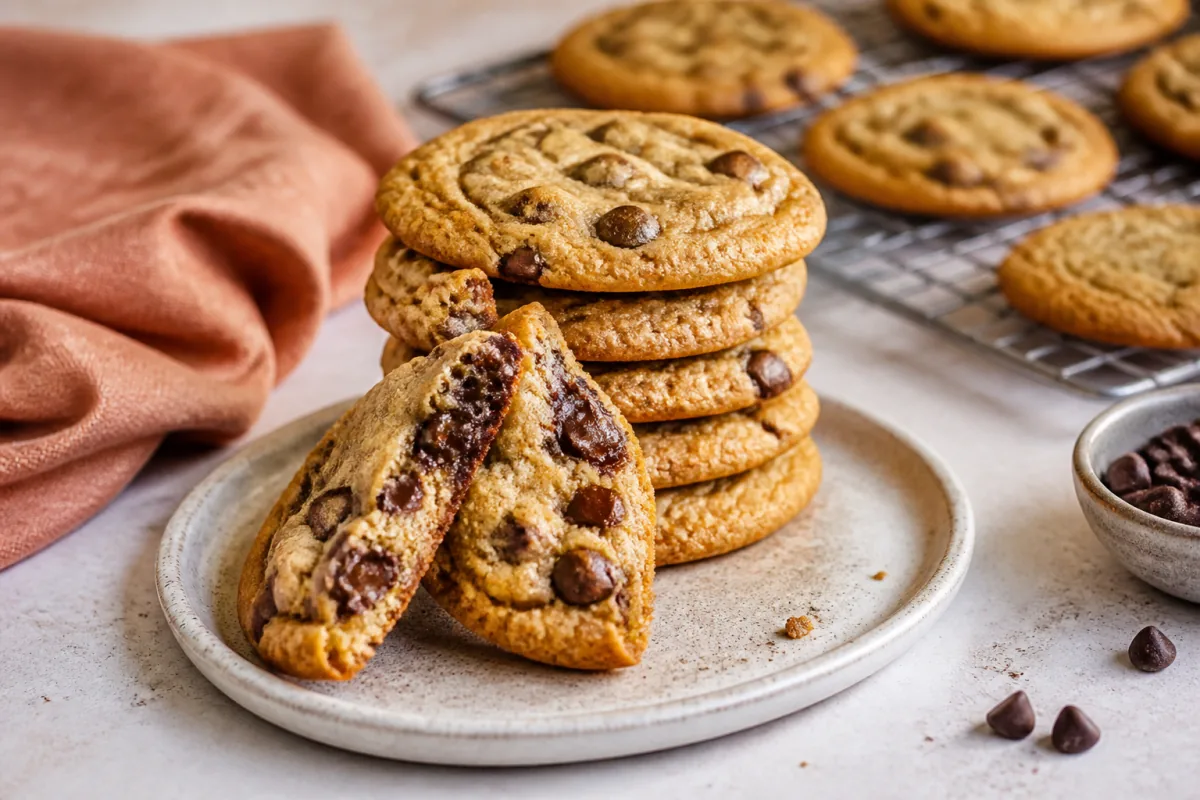
These soft and chewy chocolate chip cookies use ordinary pantry ingredients and no cornstarch. A higher proportion of brown sugar adds moisture, softened butter creates lift during creaming, and a 30-minute chill limits spreading. The result is a cookie with golden edges, a tender center and pockets of melted chocolate.
The gram measurements matter more than any “secret” ingredient. Flour packs unevenly into cups, and a small excess is enough to turn a chewy cookie dry. If you have a kitchen scale, use it.
At a glance
- Brown sugar outnumbers white sugar 2:1 for a softer, chewier center.
- Chill the dough for at least 30 minutes so the cookies hold their shape.
- Bake one tray at a time and remove it when the centers still look soft.
- The recipe makes about 30 medium cookies.
Image disclosure: The food images in this article are AI-generated illustrations. They are visual references; your finished cookies will vary.
Ingredients
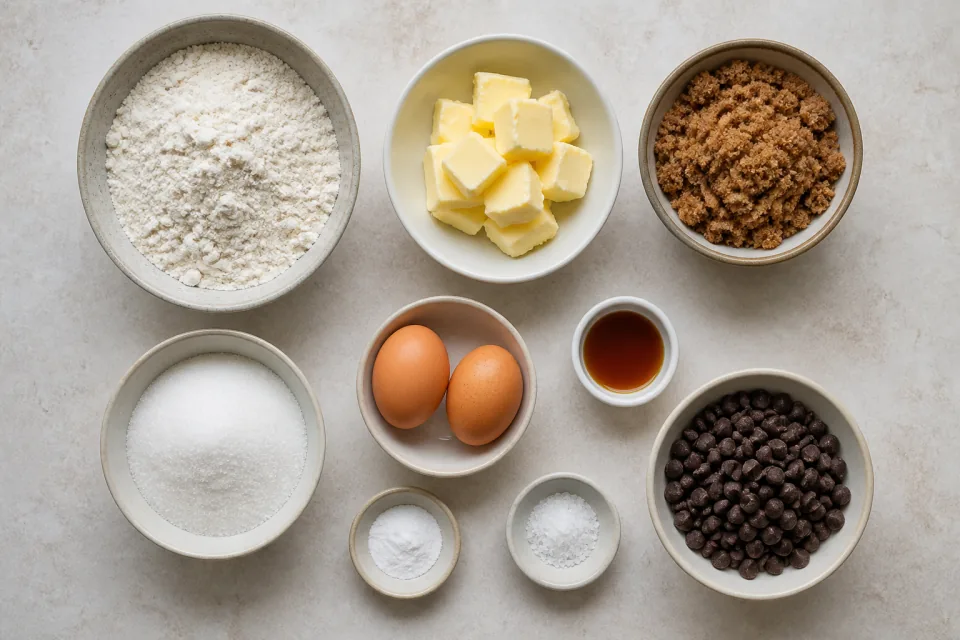
- 2 1/4 cups (280 g) all-purpose flour, spooned and leveled if using cups
- 1 teaspoon baking soda
- 3/4 teaspoon fine salt
- 1 cup (226 g) unsalted butter, softened to about 65°F/18°C
- 1 cup packed (200 g) light or dark brown sugar
- 1/2 cup (100 g) granulated sugar
- 2 large eggs, at room temperature
- 2 teaspoons vanilla extract
- 2 cups (340 g) semisweet chocolate chips or chopped chocolate
- Flaky salt for finishing, optional
This recipe contains wheat, milk and egg; many chocolate chips also contain soy. Check the exact labels when baking for anyone with an allergy.
How to Make Soft, Chewy Chocolate Chip Cookies
- Mix the dry ingredients. Whisk the flour, baking soda and salt in a medium bowl. This disperses the baking soda before it reaches the wet dough.
- Cream the butter and sugars. Beat the softened butter, brown sugar and granulated sugar for 2 to 3 minutes on medium speed. The mixture should look lighter and fluffy, not greasy.
- Add eggs and vanilla. Beat in the eggs one at a time, scraping the bowl after each. Mix in the vanilla just until smooth.
- Make the dough. Add the flour mixture on low speed. Stop when only a few flour streaks remain, then fold in the chocolate by hand. Do not keep mixing after the flour disappears.
- Chill. Cover and refrigerate the dough for 30 minutes. For deeper caramel flavor, chill it up to 48 hours; let very firm dough sit for 10 minutes before scooping.
- Heat the oven. Preheat to 350°F (180°C) with a rack in the center. Line a cool baking sheet with parchment paper.
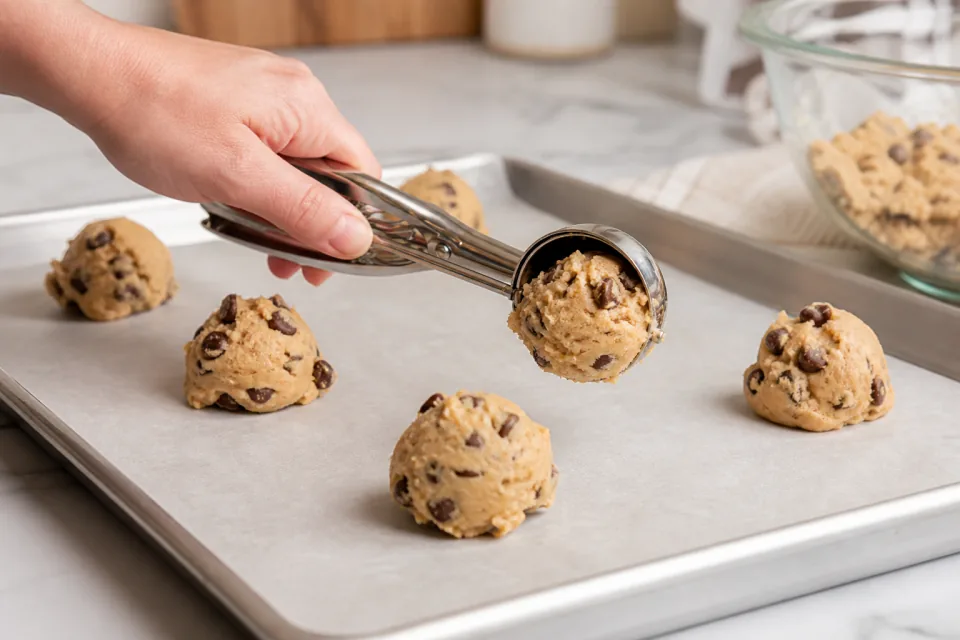
- Portion. Scoop 1 1/2-tablespoon portions, about 38 g each, and set them 2 inches/5 cm apart. Keep the remaining dough chilled between batches.
- Bake. Bake one tray for 10 to 12 minutes. The edges should be light gold and set; the centers should look puffed and slightly underdone.
- Cool. Leave the cookies on the hot tray for 5 minutes, then move them to a rack. Add a tiny pinch of flaky salt while warm if desired.
Why This Method Works
Brown sugar contains molasses and retains more moisture than granulated sugar. Using twice as much brown sugar gives the center a chewier texture without relying on cornstarch. Granulated sugar is still necessary for spread and crisp edges.
Creaming softened—not melted—butter with sugar traps small air pockets. Melted butter produces a denser dough that spreads faster. If the butter looks oily or partially liquid, chill it before mixing.
The short rest does two jobs: it firms the butter and gives the flour time to hydrate. Both reduce uncontrolled spread. Baking at 350°F/180°C allows the center to set without making the edge too dark.
Troubleshooting
| Problem | Likely cause |
|---|---|
| Cookies spread very thin | Butter or tray too warm |
| Cookies stay tall and dry | Too much flour |
| Cookies are tough | Dough overmixed |
| Centers are crisp, not chewy | Overbaked |
| Uneven browning | Multiple trays or inaccurate oven |
Before committing the full batch, bake one test cookie. If it spreads too much, chill the dough another 15 minutes. If it barely spreads, gently flatten the remaining portions before baking and recheck your flour measurement next time.
Storage and Freezing
Store cooled cookies in an airtight container at room temperature for up to five days. Let them cool completely before closing the container so trapped steam does not soften the edges.
To freeze dough, portion it onto a tray and freeze until firm, then transfer the pieces to a freezer-safe bag for up to three months. Bake from frozen at 350°F/180°C, adding about two minutes. Look for set edges rather than relying only on the clock.
Freeze baked cookies for up to three months with parchment between layers. Thaw at room temperature in the closed container to reduce condensation on the surface.
Frequently Asked Questions
Can I skip chilling the dough?
You can bake a test cookie immediately, but the batch will usually spread more and have less developed flavor. A 30-minute chill gives a more reliable thickness.
Why did my cookies turn out flat?
The butter may have been too warm, the tray may have been hot from a previous batch, or the flour may have been undermeasured. Chill the dough and always portion onto a cool tray.
Can I use salted butter?
Yes. Reduce the added salt to 1/4 teaspoon, although salt levels vary between brands.
Can I make the dough ahead?
Yes. Refrigerate it tightly covered for up to 48 hours. Let it soften briefly only if it is too firm to scoop.
Are these the same as air-fryer cookies?
No. This version is designed for a conventional oven and a full batch. For a smaller appliance-specific method, see our Air-Fryer Chocolate Chip Cookies.
Serving
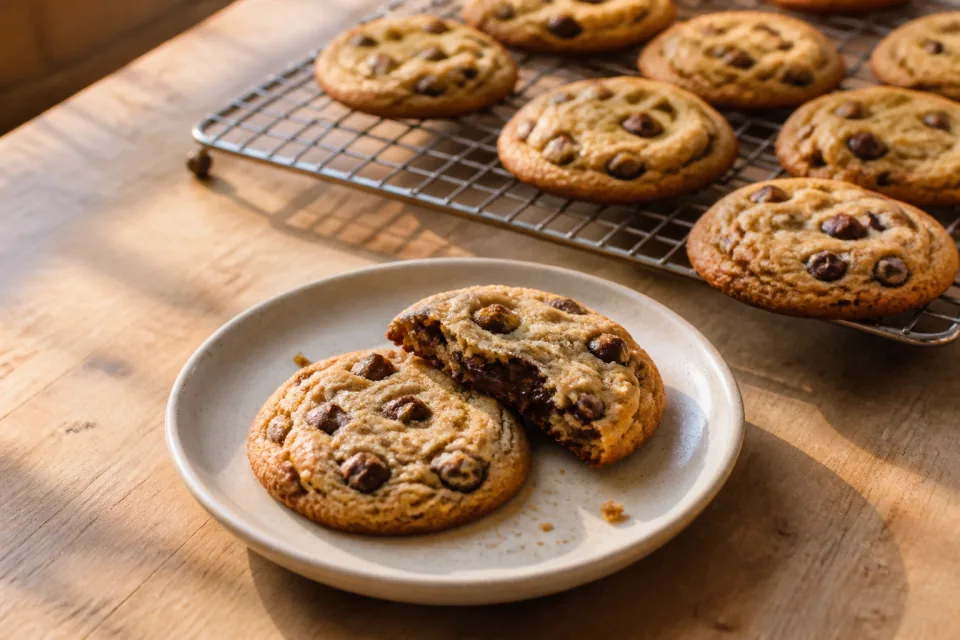
Serve the cookies warm rather than piping hot, when the centers have set enough to hold together and the chocolate is still soft. For a playful no-bake option at summer parties, try our Hamburger Cookies.