
The Best Fajita Chicken Flatbread Recipe: Easy Homemade Dough
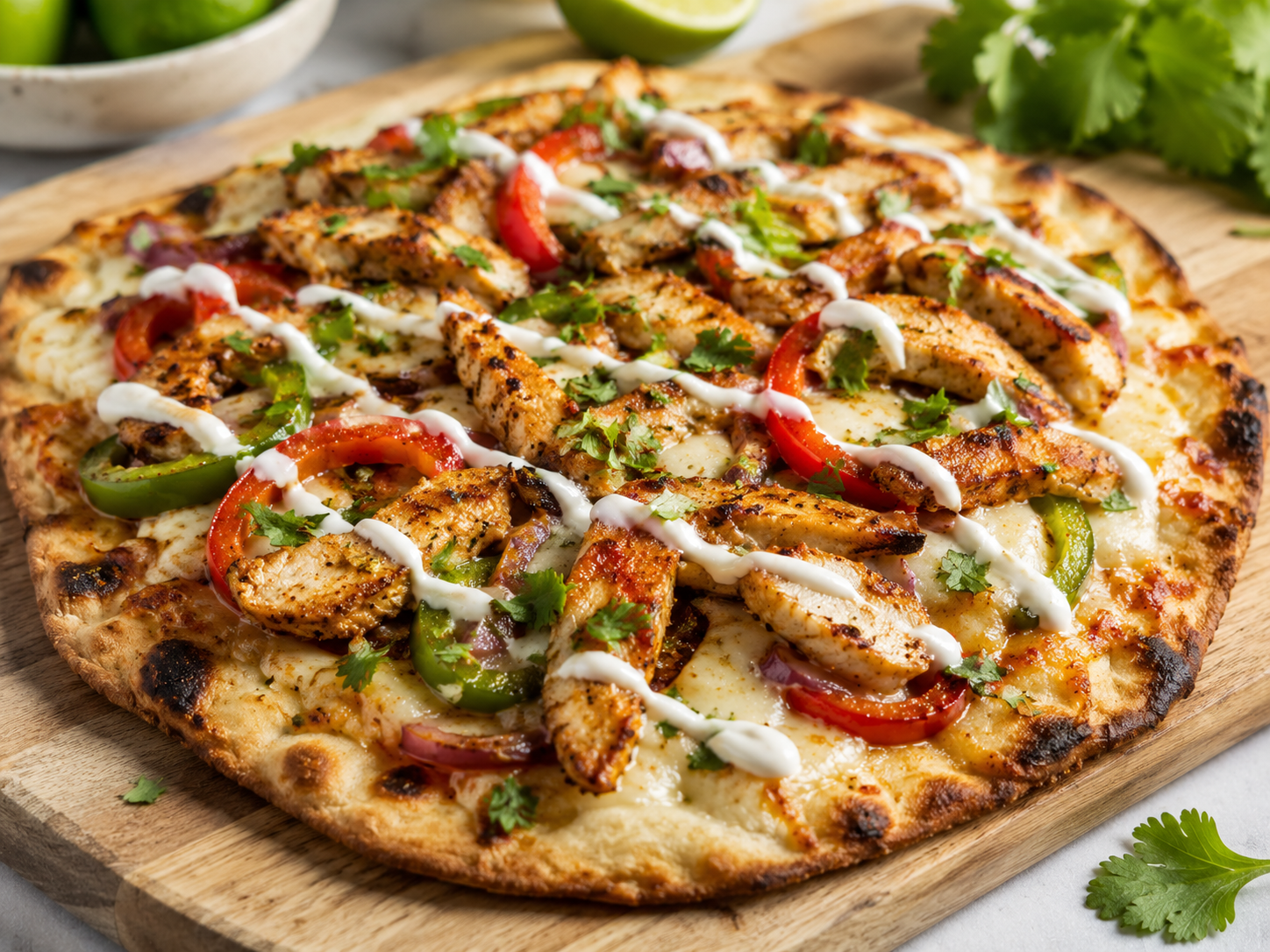
How do you make an easy fajita chicken flatbread recipe from scratch? To make a quick fajita chicken flatbread recipe from scratch, skip the yeast and mix a rapid dough using 200g of flour, 3.5g of salt, 8g of honey, and 100ml of water. Roll the dough paper-thin and flash-cook it in a hot cast-iron skillet for 1 minute per side before topping it with seared fajita-spiced chicken breast strips, sliced peppers, onions, and lime-infused sour cream.
Flatbreads are the ultimate modern culinary canvas — crispy, highly customizable, and incredibly fast to prepare. This viral social media-inspired fajita chicken flatbread recipe bridges the gap between taco night and pizza night. By preparing your own lightning-fast, yeast-free flatbread dough and pairing it with deeply marinated chicken and sweet blistered peppers, you create an appetizer or weeknight dinner that is light, crispy, and deeply satisfying.
Rosalina’s Kitchen Note: The first time I made this fajita chicken flatbread, I rolled the dough too thick and it turned out bready instead of crisp. After two more test batches, I found the key: paper-thin dough (about 2–3mm) and a very hot cast-iron pan. The difference is dramatic — the thinner flatbread gets those beautiful charred bubbles and stays flexible enough to fold.
Flatbread occupied a specific slot in my weekly rotation for a reason: it is technically an appetizer but protein-dense enough to be dinner, it looks impressive enough for guests but simple enough for a Tuesday, and the homemade dough requires roughly the same effort as opening a bag of pita. The entire build — dough to table — runs 30 minutes. The no-yeast formula means no proofing wait, no temperature management, no uncertainty. You mix, rest, roll, and cook. For a week where grocery shopping happens once and cooking decisions happen under cognitive load, having a recipe that uses basic pantry flour and whatever protein is in the fridge is not a convenience. It is a system.
The Food Science Behind This Flatbread
Yeast-Free Dough: How Gluten Develops Without Fermentation
Standard yeast-leavened bread relies on CO2 gas produced by fermentation to create an open, airy crumb structure. This flatbread deliberately omits yeast — because for a thin, crispy base, an open crumb structure is exactly what you do not want. The 3–4 minute kneading phase develops the gluten network mechanically: stretching aligns the glutenin and gliadin proteins into long, elastic chains that give the dough both strength and extensibility. The 5-minute rest after kneading allows that network to relax, making the dough significantly easier to roll paper-thin without springing back. The small amount of honey in the formula accelerates surface Maillard browning during pan cooking, mimicking the char of a wood-fired oven without the equipment.
Cast-Iron Flash-Cooking vs. Oven Finishing: Two Different Jobs
The stovetop step and the oven step perform entirely different functions and cannot replace each other. The cast-iron pan at medium-high heat (approximately 220°C / 430°F surface temperature) creates the Maillard-browned spots and sets the dough structure through rapid starch gelatinization — this takes 1 minute per side. The oven step (400°F / 200°C, 5 minutes) then melts the mozzarella evenly via radiant heat while the flatbread edges continue crisping from below on the baking sheet. Attempting to do both in the oven produces a pale, soft base. Attempting both on the stovetop burns the topping before the cheese melts.
Why Paper-Thin Rolling Is Non-Negotiable
Thickness is the single most impactful variable for texture. A flatbread rolled to 3mm (about 1/8 inch) has low thermal mass — meaning the pan’s heat penetrates to the center almost instantly, producing uniform crispness. A flatbread rolled to 6mm has enough insulation that the surface chars while the interior remains doughy. Aim for a dough disc where you can almost see your hand through it when held up to light. That is the correct target thickness.
Nutrition Information (Per Serving)
| Nutrient | Amount |
|---|---|
| Calories | 410 kcal |
| Protein | 29g |
| Fat | 11g |
| Carbohydrates | 48g |
| Fiber | 3g |
Ingredients for This Fajita Chicken Flatbread Recipe
- All-Purpose Flour (200g): Standard plain flour works perfectly. The gluten network develops quickly when mixed with a touch of honey, making it easy to roll thin.
- Honey (8g): A small touch in the dough encourages rapid browning in the dry skillet, mimicking the wood-fired flavor of traditional ovens.
- Chicken Breast (300g, sliced thin ): Slice the chicken before searing to maximize the surface area coated in spices.
- Bell Peppers (1 red) & Onion (1/2 yellow): Blistered in the same hot skillet to develop slightly charred edges and sweet depth.
- Cumin (1 tsp) + Smoked Paprika (1 tsp) + Cayenne (pinch): The classic fajita spice trio for bold, smoky heat.
- Mozzarella Cheese (1/2 cup, shredded): Melts perfectly and creates a light, stretchy layer over the flatbread.
- Sour Cream + Lime Juice: Thin it out with a squeeze of fresh lime juice to create a vibrant, easily drizzled finishing crema.
Step-by-Step Instructions
- Knead the Quick Dough: In a medium bowl, combine the all-purpose flour, salt, honey, and warm water. Stir with a spatula until a rough dough forms, then turn it out onto a lightly floured surface. Knead for 3 to 4 minutes until smooth and elastic. Divide the dough into two equal portions, cover with a clean kitchen towel, and let it rest for 5 minutes.
- Sear the Fajita Chicken: Heat one tablespoon of olive oil in a skillet over high heat. Toss the thinly sliced chicken strips with ground cumin, cayenne pepper, paprika, salt, and black pepper. Sear the chicken for 3 to 4 minutes until beautifully browned and fully cooked. Remove from the pan and set aside.
- Blister the Veggies: In the same hot skillet, add another splash of oil and toss in the sliced bell peppers and onions. Sauté for 3 to 4 minutes until they develop slightly charred edges but maintain a sweet, crisp bite.
- Cook the Flatbreads: Roll each portion of dough on a floured surface until it is roughly 10 inches in diameter and paper-thin. Heat a dry cast-iron skillet over medium-high heat. Place the flatbread directly in the dry pan. Cook for 1 minute until large bubbles puff up, flip, and cook for another 45 seconds until golden brown spots appear.
- Assemble and Crisp: Preheat your oven to 400°F (200°C). Place the cooked flatbreads on a baking sheet. Top with a layer of mozzarella, the blistered peppers, onions, and seared chicken. Bake for 5 minutes until the cheese is melted and edges are beautifully crisp. Drizzle with lime crema, garnish with fresh cilantro, and slice.
Storage, Component Prep & Make-Ahead Strategy
The Components-First Rule
Assembled flatbreads do not store or reheat well — the base loses crispness within an hour and the cheese congeals. Store all components separately. Cooked flatbread bases wrap in foil and keep at room temperature for 1 day; do not refrigerate (condensation makes them soft). The seared chicken and pepper filling keeps in an airtight container in the refrigerator for up to 3 days. When ready to serve again, assemble cold on the base, bake at 375°F (190°C) for 6–8 minutes, and the result is indistinguishable from fresh.
Dough Make-Ahead & Freezing
The raw dough is an excellent make-ahead component. Wrap tightly in plastic film and refrigerate for up to 2 days — the resting period actually improves gluten relaxation and makes rolling easier. For longer storage, divide into individual portions and freeze flat for up to 1 month. Thaw overnight in the refrigerator. The chicken filling also freezes well in portions — thaw and reheat in a hot skillet for 2 minutes before assembling.
Office & Portable Meal Strategy
For a portable version: roll dough slightly thicker (4mm), cook through completely on the stovetop without the oven step, then wrap the cooled flatbread around the filling like a wrap. Secure with foil. This travels well for up to 4 hours at room temperature and provides 29g of protein per serving — a complete, high-protein portable meal that requires no reheating.
Frequently Asked Questions
Can I make this fajita chicken flatbread recipe gluten-free?
Yes! You can substitute the all-purpose flour with a 1:1 gluten-free baking flour blend. Add 1/4 teaspoon of xanthan gum if your blend does not contain it, to help with elasticity when rolling.
Why did my flatbread turn out tough instead of crispy?
Tough flatbreads usually occur if the pan wasn’t hot enough, which forces the dough to dry out slowly rather than flash-cooking. Ensure your cast-iron skillet is hot and smoking slightly before placing the dough in.
Can I use store-bought flatbread for this fajita chicken flatbread recipe?
Yes. If you are in a rush, store-bought naan, pita bread, or pre-made flatbread bases work as an excellent shortcut. Simply skip the dough steps, assemble with the toppings, and bake.
More Recipes You Will Love
Hosting a gathering? Pair this smoky flatbread with our authentic Bistec en Salsa Recipe for a complete Mexican-inspired feast! For food safety guidelines on cooking chicken to the correct internal temperature, visit FoodSafety.gov – Safe Minimum Cooking Temperatures. Browse more poultry recipes in our Chicken & Poultry Category.
Further reading: Maillard reaction.
If you love quick flatbread meals, try our Vegan Onion Flatbread, our High-Protein Cottage Cheese Flatbreads, or this crowd-pleasing Charcuterie Board Flatbread.
This post may contain affiliate links. If you make a purchase through these links, we may earn a small commission at no extra cost to you. See our Affiliate Disclosure for details.
Recipe Info & Nutrition
Per serving — estimated values